
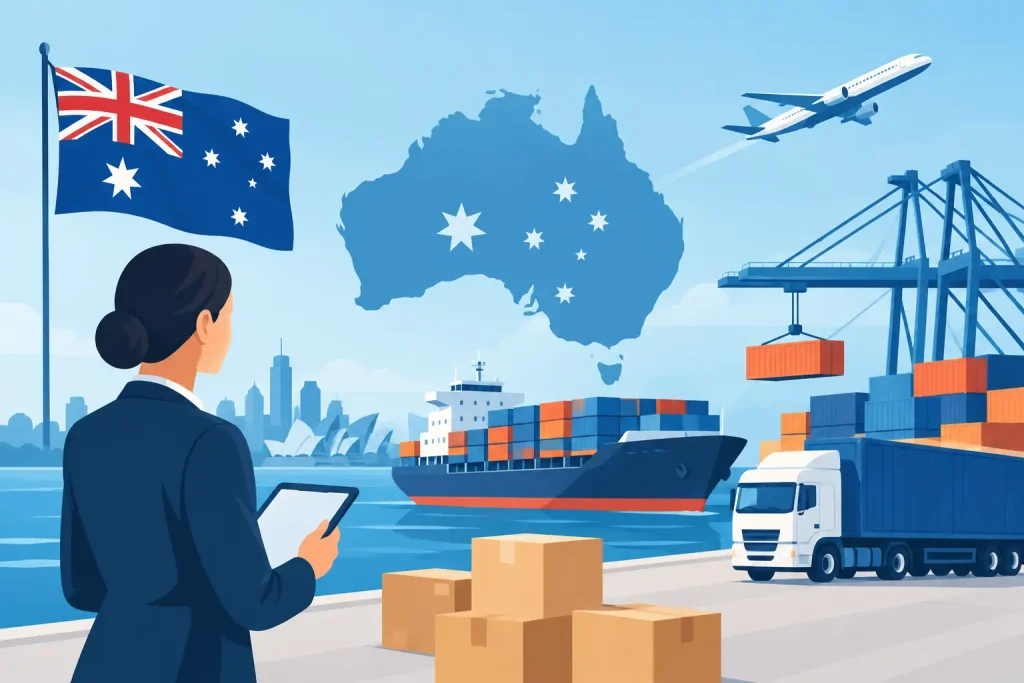
A shipment can be on the water, booked into a warehouse and urgently needed by a customer, yet still stop at the border because one declaration, tariff classification or permit requirement was missed. For Australian importers and exporters, the best customs brokerage solutions are not simply about lodging entries. They provide informed control over compliance, clearance timing, duty exposure and the transport arrangements that follow.
Customs brokerage is often treated as an administrative task until a consignment is held, unexpected duty is charged or cargo cannot be collected from the terminal. The right brokerage partner helps prevent those outcomes by understanding both the regulatory requirements and the commercial pressure behind each shipment.
What makes a customs brokerage solution effective?
An effective brokerage solution combines technical accuracy with practical freight coordination. It should ensure customs declarations are lodged correctly, but it should also account for the shipment’s mode, arrival schedule, delivery location, commodity and wider supply chain plan.
For imports into Australia, this generally means managing the information required for Australian Border Force clearance, assessing duty and GST implications, identifying biosecurity requirements, and coordinating with shipping lines, airlines, depots, transport providers and warehouses. For exports, the focus may include export declarations, commodity controls, destination-country documentation and ensuring cargo moves to the port or airport without avoidable delay.
The difference matters because a broker can technically lodge an entry while leaving the importer to resolve a container availability issue, quarantine direction or final-mile delivery problem. A more complete solution keeps these activities connected. That is particularly valuable for businesses receiving regular containerised freight, time-critical air freight, seasonal retail stock or specialised machinery.
Best customs brokerage solutions: what to assess
There is no single best brokerage model for every importer. A business bringing in low-volume samples has different needs from a wholesaler clearing multiple containers each month. The best fit depends on cargo type, trading frequency, risk profile and how much internal logistics capability the business has.
Customs compliance that goes beyond data entry
A broker should have a disciplined process for reviewing commercial invoices, packing lists, bills of lading or air waybills, supplier details and product descriptions before cargo arrives. The quality of that review is critical. Vague descriptions such as “parts”, “accessories” or “home goods” can create classification uncertainty and lead to questions from border authorities.
Correct tariff classification affects the duty rate, applicable concessions and statistical reporting. Origin can also affect duty treatment under a free trade agreement, but only where the goods meet the relevant rules and acceptable origin documentation is available. A dependable broker will not assume a preferential rate applies simply because goods were shipped from a particular country.
Biosecurity requirements must be assessed separately. Packaging materials, timber products, food-related goods, machinery, textiles and used equipment can all attract additional scrutiny. Cleaning, treatment certificates, supplier declarations and inspection arrangements may be needed. Early review gives importers time to resolve gaps before the cargo is at the wharf or airport.
Clear advice on landed cost
Customs clearance affects more than the arrival date. It shapes the true cost of the goods. Importers need visibility over customs duty, import GST, processing charges, biosecurity costs, port charges, storage risk and any transport costs needed to move freight from the terminal.
A strong brokerage provider explains the likely cost position in plain commercial terms. This helps procurement teams set selling prices, compare suppliers and forecast cash flow. It also supports better decisions where a tariff concession, free trade agreement claim or alternative shipping method may be relevant.
Cost optimisation must remain compliant. Reducing declared values without a valid basis, using an unsuitable tariff code or making unsupported origin claims can create far greater exposure than any short-term saving. The right solution protects the business by treating compliance as part of cost control, not an obstacle to it.
Visibility before arrival, not only after a hold
The most useful brokerage support begins before the vessel berths or the aircraft lands. Pre-arrival planning allows documents to be checked, likely interventions to be identified and entry preparation to begin early. It reduces the chance that an importer first hears about an issue after storage has started accumulating.
Ask how the provider communicates milestones and exceptions. Your operations team should know when documents are outstanding, when clearance has been lodged, whether an inspection has been directed and when cargo is ready for collection. Regular updates are especially important where stock is tied to a promotional launch, production schedule or retail replenishment window.
Why integrated freight support changes the result
Customs brokerage works best when it is connected to the freight movement around it. A broker operating separately from the freight forwarder and domestic carrier may complete clearance efficiently, but handovers can still create delays or duplicated communication.
An integrated provider can align ocean or air freight bookings, customs documentation, terminal collection, cartage delivery, warehousing and distribution under one operating plan. If a container is selected for inspection, the team managing delivery can adjust booking times. If a shipment is cleared earlier than expected, warehouse receiving can be brought forward. These are practical gains, not theoretical ones.
This approach is particularly relevant for complex freight. Oversized machinery may require specialised transport once released. Retail imports may need container unpacking and allocation to multiple stores. Vehicles, boats and caravans can require specific handling, inspection and delivery arrangements. Brokerage needs to sit within the whole movement, rather than operate as an isolated compliance step.
MCC World International supports this type of end-to-end coordination by combining customs clearance with international freight, local cartage, warehousing and distribution planning across Australian supply chains.
Questions to ask before appointing a broker
Before selecting a customs brokerage provider, businesses should test how the provider will operate in real conditions, not only compare a clearance fee. The lowest quoted fee can become expensive if it is paired with limited pre-arrival review, unclear communication or no support when an inspection occurs.
Ask who will review classifications and origin claims, how biosecurity risks are identified, and what documentation is required from suppliers. Confirm whether there is a named contact for exceptions and whether the brokerage team can coordinate directly with your freight forwarder, warehouse or transport operator.
It is also worth asking how the provider handles urgent clearances, amendments, customs queries and cargo that arrives without complete documents. A clear process does not guarantee there will never be a delay, but it shows whether the business has the capability to manage one.
For regular importers, request reporting that supports internal reconciliation. Useful reporting may show entry references, duty and GST amounts, tariff classifications, shipment status and clearance dates. This creates an audit trail and helps identify recurring issues with particular suppliers or product lines.
Common gaps that cause avoidable delays
Many customs delays begin well before the shipment departs. Suppliers may issue invoices with incomplete product descriptions, show inconsistent quantities across documents, or provide origin declarations that do not meet the applicable requirements. Importers that give suppliers a clear document standard usually experience fewer problems at the border.
Another common gap is leaving broker engagement until cargo has arrived. This limits the time available to assess permits, treatment evidence or classification questions. For new products, new suppliers or goods that may be subject to biosecurity controls, send documentation for review before the freight is booked or at least before arrival.
Finally, do not overlook delivery planning. Clearance does not automatically mean a container can be collected immediately or that a warehouse is ready to receive it. Terminal availability, transport bookings, unpack requirements and delivery windows need to be managed alongside the customs process.
Build brokerage into your supply chain plan
The best customs brokerage solution is one that gives your business certainty where it matters: compliant declarations, timely escalation of risks, accurate landed-cost information and coordinated cargo release. It should scale from an occasional import to a high-volume freight programme without forcing your team to chase multiple parties for answers.
Treat your broker as an operational partner early in the purchasing and freight-planning process. When product data, documents and delivery requirements are reviewed before arrival, customs clearance becomes a controlled part of the supply chain rather than a last-minute barrier to getting goods where they need to be.