
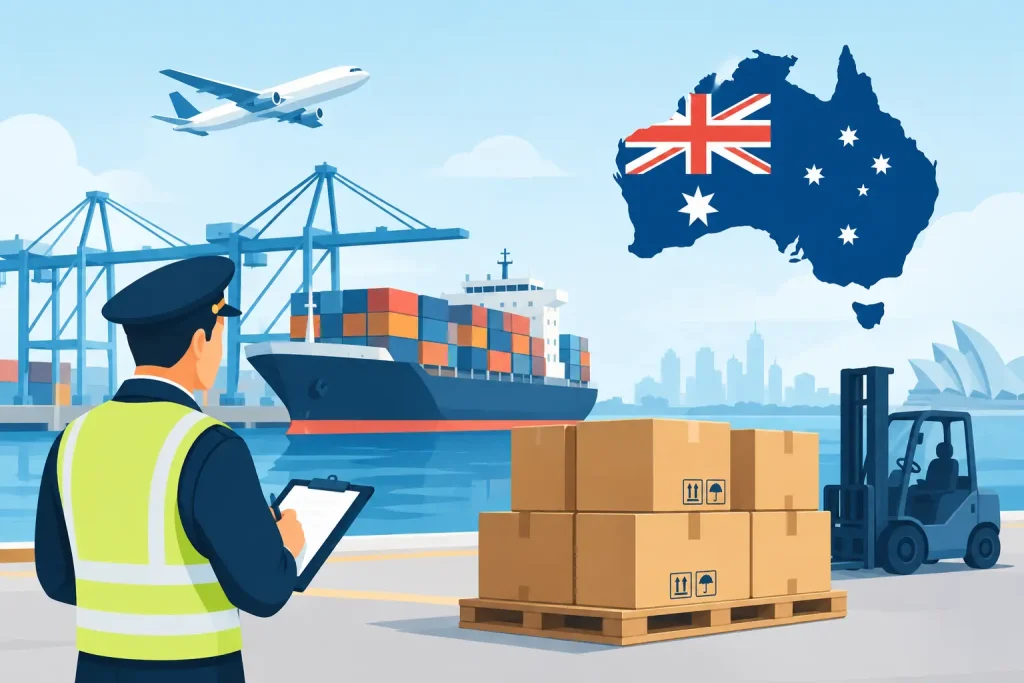
A container can arrive at port on schedule and still become an expensive problem if the paperwork, tariff treatment or biosecurity controls were not settled before departure. Australian import regulations apply well before cargo reaches Melbourne, Sydney, Brisbane or any other entry point. For commercial importers, compliance needs to be built into purchasing, packing, freight booking and landed-cost planning.
The rules are designed to protect Australia’s borders, revenue and environment. They can also affect when goods are released, what duty and GST apply, whether inspection is required and whether an item can enter Australia at all. A practical import plan treats regulation as an operating requirement, not an administrative task left until the vessel or aircraft arrives.
Australian import regulations: who regulates what?
Commercial imports are commonly assessed across several areas. The Australian Border Force manages customs controls, import declarations, tariff classification and duty collection. The Department of Agriculture, Fisheries and Forestry manages biosecurity risks, including inspection, treatment and import conditions for goods that may carry pests, soil, plant material or animal products.
Other agencies may regulate specific products. Depending on the cargo, this can include therapeutic goods, food, chemicals, vehicles, telecommunications equipment, firearms, protected wildlife products or goods subject to safety and standards requirements. The key point is that customs clearance does not replace product-specific approval. A shipment may be correctly declared for customs purposes but still require a permit, registration, test report or other evidence before it can be supplied or released.
Responsibility ultimately sits with the importer of record. Freight forwarders and customs brokers can coordinate documentation, lodge declarations and identify likely compliance issues, but they rely on accurate information from the importer, supplier and manufacturer.
Start with the product, not the freight quote
The most useful compliance work happens before an order is confirmed. Importers should understand exactly what they are buying: its material composition, use, country of manufacture, value, packaging and whether it contains timber, food, batteries, chemicals or other controlled components.
A generic description such as “hardware”, “samples” or “homewares” is rarely enough. Customs classification is based on the goods themselves, not on a supplier’s marketing description. Two products that look similar may attract different tariff treatment because of their material, function or level of manufacture.
A clear product file should include supplier specifications, photographs, invoices, packing details and any available compliance documents. For machinery, this may also include serial numbers and technical manuals. For furniture and flooring, it may include timber species, treatment details and packaging information. These records support the declaration and reduce the risk of delays when a regulator requests more detail.
Tariff classification and duty rates
Imported goods are assigned a tariff classification under Australia’s customs tariff. That classification helps determine the rate of customs duty, along with any applicable concessions, anti-dumping measures or free trade agreement preferences.
Duty is not always a simple percentage of the supplier invoice. The customs value may include adjustments, and freight, insurance and other costs can affect the GST calculation. Import processing charges may also apply. Landed cost should therefore be assessed before goods are sold or purchase orders are finalised.
Free trade agreements can reduce or eliminate duty on qualifying goods, but country of export alone is not enough. The goods must meet the relevant rules of origin and be supported by the required origin documentation or declaration. A product shipped from one country may have been manufactured elsewhere, which can change its eligibility.
Biosecurity can change the release timetable
Biosecurity is one of the most common sources of unplanned cost and delay for commercial shipments. Australia takes a precautionary approach because pests and diseases can cause significant damage to agriculture, ecosystems and trade.
Risk is not limited to agricultural goods. Timber crates, pallets, containers with soil contamination, used machinery, vehicles, textiles, rattan products and items packed with organic materials can all attract scrutiny. Cargo may be directed for document assessment, inspection, treatment, cleaning or, in limited cases, export or destruction if requirements cannot be met.
Packaging deserves particular attention. Timber packaging should meet accepted treatment and marking requirements, while container floors and cargo surfaces should be clean and free from soil, seeds, plant matter and insects. Used excavators, tractors and other heavy equipment often require thorough cleaning before loading. Cleaning after arrival is possible in some circumstances, but it can add depot, transport, treatment and storage costs.
Import conditions vary by commodity and origin. A product that entered previously without intervention is not guaranteed the same outcome on the next shipment. Seasonal risks, origin-country conditions, changes to packaging and inspection findings can all affect the process.
Documents must tell one consistent story
Most commercial imports require an import declaration and supporting commercial documents. At a minimum, the documentation should accurately describe the goods, their quantity, value, seller, buyer, origin and shipment terms.
The commercial invoice, packing list, bill of lading or air waybill and relevant permits should align. Inconsistencies can trigger queries, particularly where there are unclear descriptions, unexplained value differences or missing information about origin. For consolidated cargo, accurate package counts and marks are especially important because errors can complicate unpacking, inspection and delivery.
Incoterms also matter. They define which party is responsible for freight, insurance and delivery at different points in the movement, but they do not remove the importer’s legal obligations in Australia. An arrangement described as “delivered” by a supplier may still leave the Australian buyer exposed to duty, GST, clearance charges and compliance risk. Confirm the agreed term and its practical cost allocation before shipment.
Plan for inspections, holds and port time
A customs or biosecurity hold does not necessarily mean something is wrong. Cargo can be selected for examination or require further information as part of normal border management. The commercial issue is whether the supply chain has allowed enough time and budget to manage that event.
Sea freight has longer transit times but can create pressure at destination when containers must be collected within terminal free time. Air freight moves faster, although an inspection or missing permit can still interrupt delivery. The right mode depends on cargo value, urgency, volume, inventory position and the likely cost of a delay.
Businesses importing time-sensitive stock should avoid planning around the earliest possible release date. Build contingency into launch dates, warehouse bookings and customer commitments. This is particularly relevant for retail peaks, project cargo, seasonal inventory and production-line components.
Use a controlled clearance process
A repeatable internal process helps importers avoid preventable exceptions. Before freight is booked, confirm the product classification, estimated duty and GST, origin status, permits and biosecurity conditions. Before departure, review supplier documents and packing methods. Before arrival, ensure the customs declaration can be prepared with complete and consistent information.
After release, retain records and review the shipment outcome. If a container required treatment, if classification needed clarification or if port costs exceeded the estimate, capture that result for the next order. Compliance improves when purchasing, operations, finance and logistics teams work from the same product and shipment data.
For businesses handling mixed freight, specialised cargo or recurring import programs, an experienced logistics partner can provide practical coordination across customs clearance, sea or air freight, cartage, warehousing and delivery. MCC World International supports importers with this end-to-end visibility, helping identify requirements early rather than reacting to a hold after arrival.
The most reliable import program is not the one that avoids every inspection. It is the one prepared to meet Australian requirements, absorb normal border processes and keep cargo moving with fewer surprises.