
When a shipment misses a production deadline, sits at the wharf waiting on clearance, or arrives with costs that were never explained properly, the issue usually is not just transport. It is coordination. That is why understanding what is international freight transport matters for any Australian business moving goods across borders.
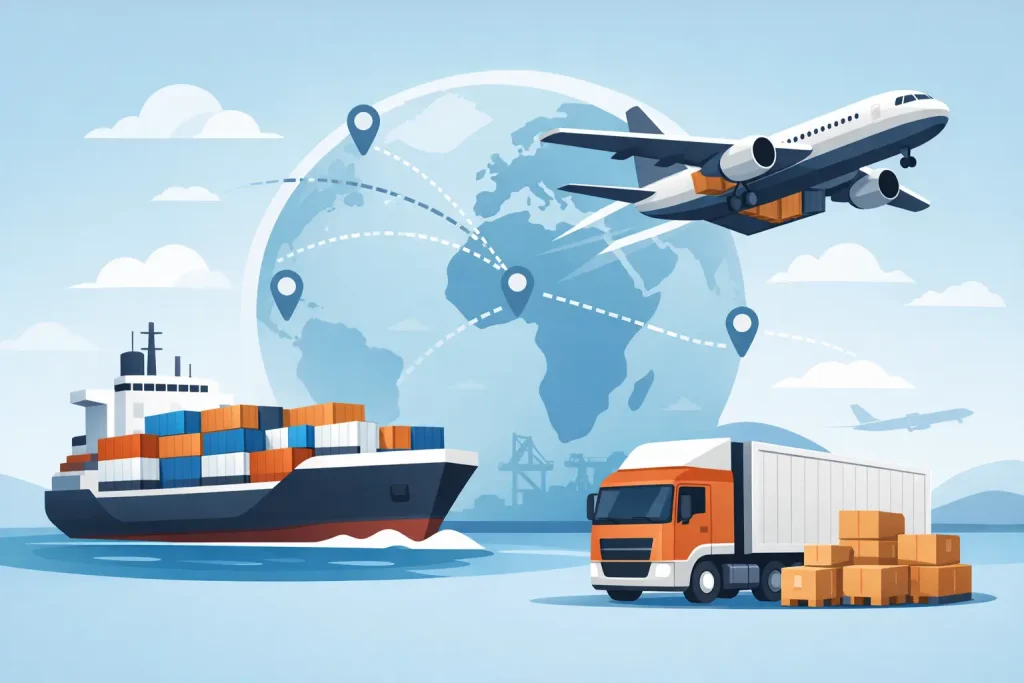
International freight transport is the movement of cargo from one country to another using one or more transport modes, supported by customs processes, documentation, handling, compliance and delivery planning. In practice, it is not simply a vessel booking or an aircraft uplift. It is the end-to-end management of how goods travel internationally from supplier to consignee, often across sea freight, air freight, road transport, warehousing and border clearance.
For importers and exporters, that distinction is important. Freight transport is the physical movement, but successful international freight relies on much more than a carrier. Timing, Incoterms, packaging, routing, permits, duty exposure and local delivery arrangements all affect whether cargo moves efficiently or creates avoidable cost and delay.
What is international freight transport in practical terms?
At a practical level, international freight transport begins well before cargo departs origin. The shipment needs to be classified correctly, packed to suit the mode of transport, booked with the right carrier and matched to the required transit time and budget. From there, documents must align with customs requirements in both the export and import markets.
Once cargo is in transit, the process may involve port handling, terminal transfers, consolidations, deconsolidations, inspections, storage and final-mile delivery. For many Australian businesses, especially those importing into Melbourne, Sydney, Brisbane, Adelaide or Perth, international freight also includes customs clearance, cartage from port or airport, and in some cases warehousing or distribution.
This is why freight forwarding plays such a central role. A freight forwarder coordinates the moving parts across multiple service providers so the shipment is managed as one job rather than a string of disconnected tasks.
The main types of international freight transport
The right transport mode depends on the cargo, timeline, budget and risk profile. There is no single best option for every shipment.
Sea freight
Sea freight is the most common choice for larger or less time-sensitive shipments. It is generally the most cost-effective option for bulk cargo, container loads, machinery, retail stock and many standard import/export movements. Businesses typically choose between full container load and less than container load, depending on volume.
The trade-off is time. Sea freight offers stronger cost efficiency, but transit times are longer and schedules can be affected by port congestion, blank sailings and seasonal disruption. For businesses with solid forecasting and inventory planning, that is often manageable. For urgent replenishment stock, it may not be.
Air freight
Air freight is used when speed matters more than unit freight cost. It suits urgent commercial cargo, high-value products, spare parts, medical goods, time-critical retail lines and shipments where delays would cost more than the freight premium.
It is faster, but capacity can tighten quickly and pricing can fluctuate. Air freight also comes with stricter dimensional and security requirements, so cargo presentation and paperwork need to be correct from the outset.
Road and multimodal freight
International freight rarely ends at the port or airport. Cargo still needs to move to warehouses, retail networks, project sites or end customers. That is where road freight and multimodal planning come in.
A shipment might arrive by sea into Australia, clear customs, move by truck to storage, then be distributed domestically. In other cases, air and road are combined to shorten total lead time. Multimodal transport is often the most practical solution because it matches each stage of the route to the most suitable mode.
What is included besides transport?
This is the point many businesses only fully appreciate after a problem occurs. International freight transport includes operational and regulatory functions that sit around the cargo movement itself.
Documentation is one of the biggest. Commercial invoices, packing lists, bills of lading, airway bills, permits, certificates and declarations all need to be accurate and consistent. Small errors can lead to holds, extra examinations, re-documentation charges or clearance delays.
Customs compliance is equally critical. Imported goods may be subject to duties, GST, biosecurity controls, tariff classification rules and product-specific restrictions. Export cargo can also require declarations, permits or country-of-origin support. For Australian importers and exporters, compliance is not optional administration. It is part of protecting the supply chain from interruption.
Cargo handling also matters more than many people assume. Oversized freight, heavy machinery, vehicles, tiles, furniture, textiles and project cargo all have specific loading, securing and handling requirements. A low rate is not much use if the service cannot manage the cargo safely or legally.
Who uses international freight transport?
Almost every trade-dependent business does, even if the process is outsourced. Retailers use it to replenish stock. Manufacturers use it to bring in components and send finished goods to overseas buyers. Wholesalers rely on it to maintain inventory flow. Construction and industrial operators use it for plant, equipment and specialised materials.
For SMEs, international freight transport can be the difference between growth and bottleneck. A business may have demand, but if inbound supply is unreliable or landed costs are unclear, margins and customer commitments start to suffer. Larger businesses face the same issue at scale, particularly when they are coordinating multiple suppliers, shipment schedules and delivery points.
The factors that affect cost and transit time
Freight cost is never based on one number alone. Mode of transport, cargo dimensions, weight, route, fuel, seasonality, carrier capacity and terminal charges all influence the final figure. The same shipment can price very differently depending on timing and market conditions.
Transit time works the same way. A quoted sailing or flight time does not represent the full delivery window. Collection, terminal receival, customs clearance, unpacking, quarantine processing and local delivery all add time. Businesses that plan only around vessel or aircraft departure dates often end up with unrealistic expectations.
Incoterms also shape both cost and responsibility. They determine which party is responsible for freight, insurance, customs tasks and delivery points. If those terms are misunderstood, disputes and surprise charges follow quickly.
Why freight coordination matters more than ever
Global freight has become more complex, not less. Capacity swings, port disruption, tighter border controls and cost volatility have made basic shipping knowledge insufficient for many commercial operators. Businesses need visibility, realistic planning and a partner that can manage exceptions before they become serious supply chain issues.
That is especially relevant in Australia, where long distances, port concentration and import reliance can amplify disruption. An overseas delay does not stay overseas for long. It affects warehouse scheduling, inventory availability, customer fulfilment and cash flow locally.
Strong freight coordination reduces that risk. It gives businesses a clearer landed cost picture, better route selection, stronger compliance control and more predictable cargo movement from origin to final delivery. That is where an experienced provider such as MCC World International adds value – not only by arranging transport, but by managing the wider logistics process around it.
How to approach international freight transport as a business decision
The best approach is to treat freight as part of supply chain strategy, not a standalone purchase. If the focus is only on the cheapest rate, hidden risks usually appear somewhere else – in delays, storage, damaged cargo, customs issues or poor delivery coordination.
A better starting point is to define what the shipment needs to achieve. Does it need the lowest landed cost, the fastest possible arrival, specialised handling, strict compliance support or flexibility across multiple consignments? Once that is clear, the transport plan can be built around the real commercial objective.
That often means accepting trade-offs. Sea freight may reduce cost but require stronger inventory planning. Air freight may protect a sales deadline but compress margin. Consolidation may save money but add handling points. Direct services may improve reliability but not always suit budget. The right answer depends on the cargo and the consequence of delay.
What Australian businesses should look for in a freight partner
Capability matters, but so does control. A reliable freight partner should be able to explain routing options, provide transparent pricing, manage customs requirements, coordinate local transport and communicate early when conditions change.
That is particularly important for businesses with non-standard freight. Project cargo, oversized machinery, vehicle shipping and fragile or high-volume retail goods need more than a booking platform. They need practical planning backed by real operational experience.
If you are asking what is international freight transport, the most useful answer is this: it is the system that keeps cross-border trade moving, from origin collection to final delivery, with compliance and coordination built into every stage. When that system is planned properly, freight supports growth instead of distracting from it. That is a far better place to run a business from.