
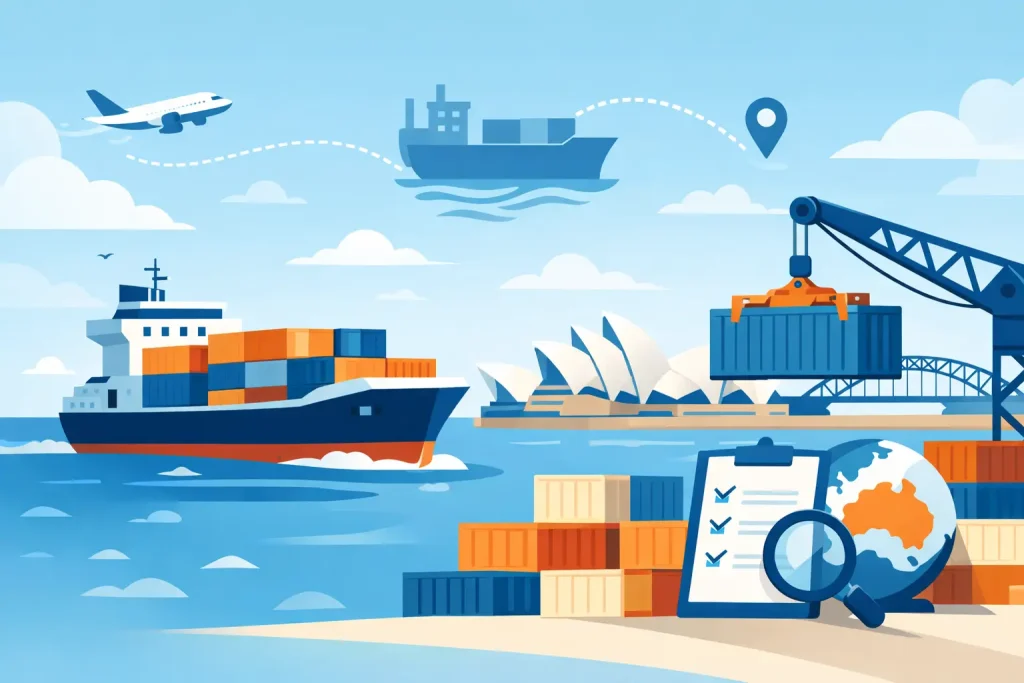
When a shipment misses a retail launch, a production run stalls, or demurrage starts building at the wharf, the question changes quickly from who can move cargo to who can manage risk. That is why many Australian businesses searching for the best sea freight companies are not really looking for the cheapest rate on paper. They are looking for consistency, compliance and control.
Sea freight decisions carry real commercial consequences. A provider that looks competitive at booking stage can become expensive once port delays, documentation errors, poor communication or weak local coordination start affecting your supply chain. For importers, exporters and procurement teams, the better question is not simply which company is biggest. It is which company is built to handle your cargo profile, your routes and your operational pressure points.
What the best sea freight companies actually do well
The strongest sea freight providers do more than secure vessel space. They manage the full movement around the ocean leg, including origin coordination, packing advice, documentation, customs requirements, local cartage, container availability and delivery planning. That matters because the sea leg is only one part of the landed supply chain.
For Australian businesses, local capability is particularly important. Sea freight into Melbourne, Sydney, Brisbane, Fremantle or Adelaide comes with different scheduling realities, terminal processes and transport considerations. A provider with limited local follow-through may book the freight but leave you exposed once the container reaches Australia.
The best operators also understand that not every consignment should be handled the same way. Full container load freight, less than container load freight, project cargo, machinery, retail stock, fragile goods and oversized freight each require different planning. A company that treats every shipment as standard freight will often create avoidable cost or delay.
Best sea freight companies: carrier or freight forwarder?
This is where many businesses lose time. Shipping lines and freight forwarders are not the same, and comparing them directly can lead to the wrong decision.
A shipping line operates vessels and container networks. If your freight task is straightforward, high volume and internally managed by an experienced logistics team, booking directly with a carrier may suit your model. You may gain a sharper base ocean rate, but you will usually take on more coordination responsibility yourself.
A freight forwarder manages the shipment across multiple stages. That can include booking with carriers, arranging collection, handling customs clearance, organising cartage, warehousing and managing exceptions when something changes. For many Australian importers and exporters, especially SMEs or businesses moving time-sensitive or specialised freight, this model is more practical because it reduces internal workload and helps contain risk.
The trade-off is simple. A direct carrier relationship may look leaner on cost in some cases, while a forwarder often delivers stronger operational coverage. If your shipments involve multiple suppliers, changing schedules, compliance complexity or domestic delivery requirements, the broader service model usually creates better value.
How to compare providers properly
Price still matters, but it should not lead the whole assessment. A low quote is only useful if the scope is clear and the service can be delivered consistently.
Start with schedule reliability. Ask how often the provider moves freight on your trade lane, which carriers they use, and what alternatives they can offer when sailings roll or space tightens. Capacity access is a major differentiator, especially during volatile shipping periods.
Then review documentation and compliance support. Errors in commercial invoices, packing declarations, tariff classifications or permit requirements can delay cargo and increase costs. Businesses importing machinery, vehicles, flooring, furniture, textiles or project cargo should pay particular attention here because those categories often involve more detailed handling or border requirements.
Communication standards are another major indicator. The best sea freight companies provide clear milestones, realistic transit expectations and early notice when a shipment is at risk of delay. Silence is expensive in logistics. If your provider only updates you after a problem has already hit the terminal or warehouse, your team loses options.
Finally, look beyond port-to-port pricing. Compare the full landed outcome, including origin fees, destination charges, customs clearance, storage risk, cartage and any handling linked to your cargo type. This is often where an apparently cheaper option stops being cheaper.
Why Australian businesses need local sea freight expertise
Australia is not a market where offshore coordination alone is enough. Biosecurity controls, customs processes, terminal conditions and domestic transport planning all affect final delivery performance. A provider can have strong overseas contacts and still underperform if they lack practical Australian follow-through.
That is especially relevant for cargo arriving under tight timelines or heading to distribution centres, project sites or regional destinations. If a container is discharged on time but sits because paperwork is incomplete, collection is not booked or delivery capacity is unavailable, the business impact is the same as a late vessel.
Local expertise also helps when freight needs to connect with other services. Many shipments do not end at the port. They move into bonded or general warehousing, metro delivery, interstate linehaul, unpacking, palletising or final-mile distribution. A provider that can coordinate those next steps creates far more control than one that hands off the cargo after discharge.
This is where an integrated operator such as MCC World International can add value, particularly for Australian businesses that need sea freight linked with customs clearance, cartage, warehousing and broader supply chain support.
Red flags when assessing sea freight companies
Some warning signs appear early if you know what to look for. Vague pricing is one. If a quote excludes key destination charges or does not clearly define what is and is not covered, budget certainty becomes difficult.
Another is overpromising on transit times. Ocean freight is affected by vessel schedules, port congestion, transhipment risk and weather disruption. A good provider will give you a commercially realistic timeframe, not just the answer you want to hear.
Limited experience with specialised cargo is another common issue. Heavy machinery, oversized freight, boats, caravans, vehicles and project cargo require different planning from standard palletised imports. If the provider cannot explain handling requirements, permit considerations or delivery constraints with confidence, that is worth taking seriously.
The last red flag is fragmented service. If your sea freight provider cannot support customs, local transport or exception management, your internal team may end up coordinating multiple parties under pressure. That can work for simple shipments, but it becomes inefficient quickly as freight volume or complexity increases.
Matching the provider to the cargo
There is no single answer to who the best sea freight companies are because the right fit depends on the freight task.
For routine FCL imports on established lanes, consistency and rate stability may be the priority. For LCL freight, consolidation quality, cut-off management and destination handling matter more. For project cargo, the focus shifts to engineering requirements, route planning, permits and lifting arrangements. For retail and wholesale importers, visibility, deconsolidation timing and distribution support can be just as important as the vessel schedule itself.
That is why procurement teams should assess providers by operational fit rather than brand recognition alone. A globally known company may suit one shipment model and be poorly aligned with another. Mid-sized businesses often get better results from providers that combine international reach with hands-on account management and practical local execution.
A smarter way to choose
If you are shortlisting providers, use a live shipment scenario rather than a generic quote request. Give each company the same cargo details, route, timing expectations and delivery requirements. Then compare how they respond.
A capable operator will ask sensible questions about cargo dimensions, packing format, Incoterms, delivery windows, customs requirements and downstream transport. That level of detail is not admin for its own sake. It shows they are planning the movement properly.
It also helps to assess how they handle problems, not just bookings. Ask what happens if a container rolls, if biosecurity inspection is triggered, or if a delivery slot changes. In freight, service quality often shows up most clearly when something does not go to plan.
The right sea freight provider should leave your team with fewer moving parts to manage, clearer cost visibility and more confidence in delivery outcomes. That is a stronger benchmark than a low headline rate.
For Australian importers and exporters, the best sea freight companies are the ones that understand the full journey from origin booking through to compliant arrival and final delivery. Choose the partner that can protect your cargo flow when conditions are straightforward and when they are not. That is what keeps stock moving, projects on schedule and customers supplied.