
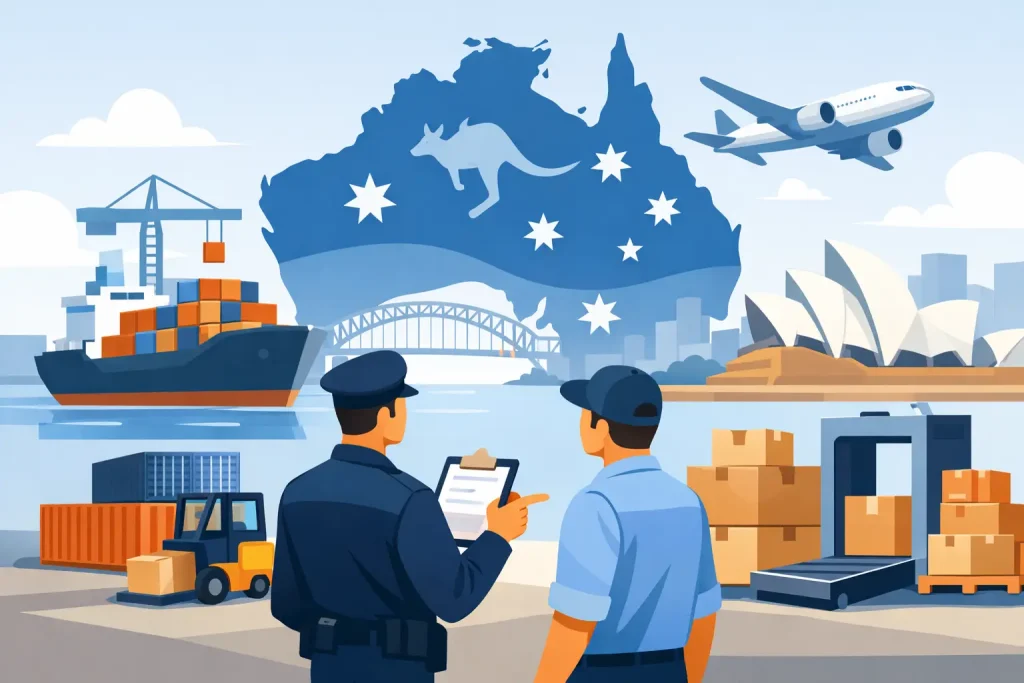
A shipment can be on the water for weeks and still come unstuck the moment it reaches Australia if the paperwork, tariff treatment or biosecurity details are wrong. That is why customs clearance Australia is not just an admin task. For importers, wholesalers, retailers and project cargo operators, it is a control point that affects delivery timeframes, landed cost and supply chain reliability.
For many businesses, the issue is not whether goods can enter Australia. It is whether they can be cleared efficiently, compliantly and without avoidable storage, inspection or delay costs. The difference usually comes down to preparation before the cargo arrives, not action after the vessel or aircraft lands.
What customs clearance Australia actually covers
In practical terms, customs clearance Australia is the process of declaring imported goods to the relevant authorities, assessing duties and taxes, confirming import conditions, and securing release of the cargo for delivery. That sounds straightforward, but the real process often involves more than a customs entry.
Depending on the cargo, importers may need to deal with tariff classification, customs value assessment, country of origin evidence, treatment under free trade agreements, GST calculations, import permits and biosecurity controls. A standard pallet of packaged consumer goods will move differently from machinery, timber products, textiles, vehicles or mixed-container freight.
This is where many businesses underestimate the task. Customs clearance is not separate from freight planning. It sits inside the broader logistics chain and affects cartage, warehousing, unpack timing and final distribution.
Why delays happen even when freight arrives on time
A vessel arriving on schedule does not guarantee a clean release. Delays often come from missing or inconsistent information across the commercial invoice, packing list, bill of lading and import declaration. Even small discrepancies can trigger questions that slow the process.
Classification is another common pressure point. If goods are classified incorrectly, the duty rate may be wrong, concessions may be missed, or authorities may require further clarification. For businesses importing specialised goods such as flooring, tiles, furniture, machinery or automotive units, product detail matters. Broad descriptions are rarely enough.
Biosecurity is another factor that changes the timing. Cargo with timber packaging, agricultural exposure, food-related use, soil contamination risk or certain plant and animal inputs may be referred for inspection or treatment. That does not always mean something has gone wrong. It simply means the cargo profile requires another layer of control before delivery can proceed.
The documents that matter most
Most import clearances depend on a core set of documents, but accuracy matters more than volume. The commercial invoice should clearly show the seller, buyer, goods description, transaction value, currency and trade terms. The packing list should match the physical cargo, including quantities, dimensions and weights where relevant.
The transport document, whether a bill of lading or air waybill, needs to align with the shipment details and consignee information. If permits, treatment certificates, origin declarations or concession documents apply, they need to be available before lodgement rather than chased after arrival.
The trade-off is simple. Faster bookings with incomplete commercial detail can create slower clearance later. Businesses that build customs-ready document processes into purchasing and supplier management usually reduce landed cost surprises over time.
Duties, GST and why landed cost is often misunderstood
One of the most common commercial mistakes is treating customs charges as a fixed afterthought. In reality, duties and GST depend on how goods are classified, valued and declared. Freight and insurance may also affect the taxable value, depending on the shipment structure.
For some products, duty may be modest or nil. For others, it can materially change margin. If a free trade agreement may apply, the benefit is not automatic. The importer generally needs the right origin evidence and the goods must meet the relevant rules. Assuming eligibility without checking can lead to underpayment risk, reassessment and compliance issues later.
This is why importers should look at customs clearance early in the procurement cycle, especially when tendering new supply lines or bringing in unfamiliar products. A shipment may appear competitive at purchase stage but become less attractive once duty, GST, inspection, storage and local transport are fully costed.
Customs clearance Australia for different cargo types
Not all freight should be treated the same way. Standard retail cartons, industrial machinery, vehicles and oversized cargo each bring different compliance and handling requirements.
General commercial freight
For regular commercial cargo, the focus is usually on accurate documentation, correct tariff classification and timely entry processing. Businesses importing on repeat lanes benefit from a consistent process because recurring errors are one of the biggest causes of avoidable cost.
Machinery and project cargo
Heavy equipment, oversized machinery and project freight often involve more scrutiny around classification, valuation and supporting technical detail. If cargo is dismantled across multiple packages or containers, the customs treatment needs to match the actual goods and shipment structure. Timing also matters because project cargo often connects to installation schedules, site access and specialised transport bookings.
Vehicles and mobile assets
Cars, motorcycles, boats and caravans can involve separate import conditions beyond standard freight documentation. Vehicle identification details, condition, origin and regulatory requirements all need to be checked carefully. In these cases, customs and compliance planning should happen well before departure.
Timber, furniture and related goods
Goods made with timber, natural fibres or other biosecurity-sensitive materials may be more likely to attract quarantine attention. Businesses importing furniture, flooring or decorative building materials should expect biosecurity controls to be part of clearance planning, not an exception.
Why integrated freight and customs support makes a difference
A common problem for importers is fragmentation. One provider handles overseas freight, another handles customs, another handles wharf transport, and another handles storage. When delays happen, responsibility becomes unclear and decisions slow down.
An integrated approach reduces that friction. When customs brokerage sits alongside sea freight, air freight, cartage, warehousing and distribution planning, there is a clearer line of control from arrival through to final delivery. That matters when containers need to be unpacked quickly, bonded freight has to be managed correctly, or priority stock needs to move straight into local distribution.
For businesses with regular import volumes, this also supports better forecasting. It becomes easier to spot recurring issues in supplier documents, high-risk product lines, seasonal inspection trends and avoidable storage exposure. MCC World International works with businesses that need that broader operational view, particularly where customs clearance is only one part of a larger freight requirement.
How to reduce customs risk before cargo ships
The most effective customs strategy usually starts before booking, not after arrival. Importers should check product descriptions, values and origin claims at purchase order stage, especially for new suppliers or new SKUs. If permits, treatment documents or product specifications may be needed, those should be identified early.
It also helps to review Incoterms carefully. Businesses sometimes assume the overseas supplier is covering matters that still sit with the Australian importer, particularly around document quality and compliance readiness. Clear instructions to suppliers can prevent the usual issues such as vague invoice wording, missing packaging details or inconsistent consignee information.
There is also a judgement call between speed and certainty. Some businesses prefer to lodge with minimal lead time to keep documents current. Others benefit from pre-arrival review and early correction of discrepancies. The right approach depends on the cargo type, shipment frequency and tolerance for delay.
Choosing a customs clearance partner in Australia
A customs provider should do more than file entries. For commercial importers, the real value is in identifying risk early, advising on classification and documentation, coordinating with freight movements, and keeping decisions transparent when issues arise.
That means asking practical questions. Can they handle both standard freight and specialised cargo? Do they understand how customs, biosecurity, cartage and warehousing interact? Can they support multiple Australian ports and airports? Will they explain charges clearly and flag likely delays before they become costly?
For growing businesses, responsiveness matters just as much as technical accuracy. A delayed response on a hold, inspection or document mismatch can affect production schedules, stock availability and customer commitments. Reliable customs clearance is not just about border compliance. It is about protecting continuity across the entire supply chain.
A well-managed import process rarely gets noticed because the cargo simply moves as planned. That is the point. When customs clearance is handled properly, your business spends less time chasing containers and more time managing stock, customers and growth.