
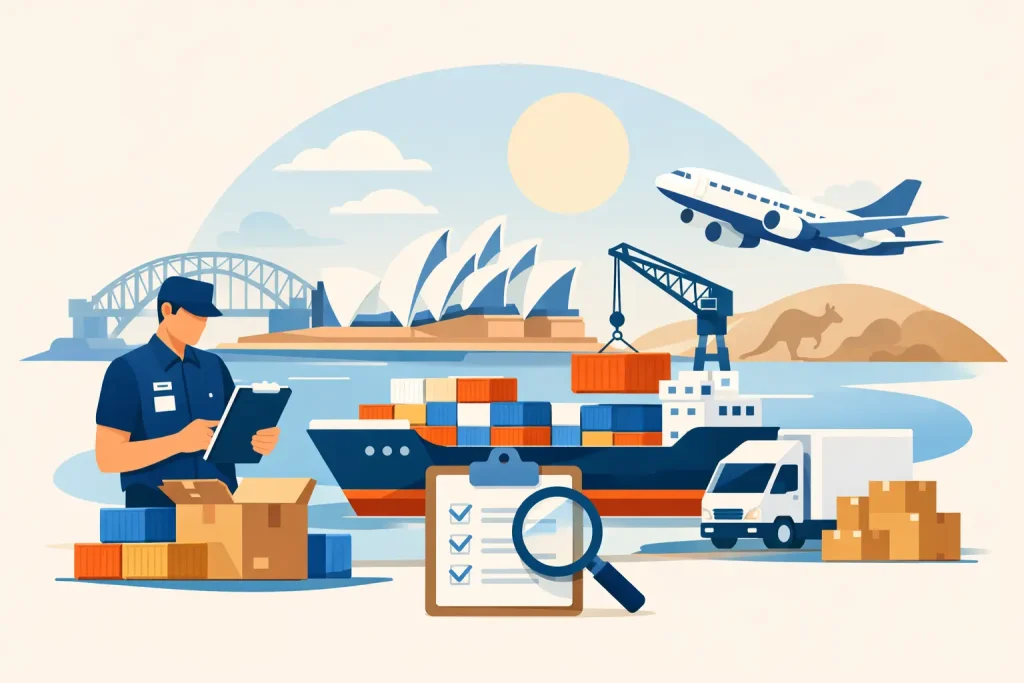
A vessel may be alongside in Melbourne or an air consignment may have landed, but cargo is not ready for delivery until the required border processes are complete. For businesses planning stock availability, production schedules or customer orders, the practical question is: how long does customs clearance take? The answer can be as little as a few minutes for a clean, correctly documented shipment, or several days where biosecurity, valuation or documentation issues require further attention.
The key distinction is between a customs declaration being processed and freight becoming physically available for collection. Customs clearance is one part of the arrival process. Terminal availability, biosecurity directions, container unpacking, inspections and local cartage arrangements can all affect the final delivery date.
How long does customs clearance take in Australia?
For a standard commercial import with complete and accurate documents, an electronic import declaration can often be assessed by the Australian Border Force (ABF) within minutes or a few hours of lodgement. This does not necessarily mean the shipment can be collected immediately. The freight must have arrived, the carrier’s cargo report must be finalised, and any applicable duties, GST and charges must be addressed.
As a practical planning guide, many importers should allow one to two business days for straightforward air freight arrivals and two to five business days for sea freight after arrival, assuming documentation is ready and no border intervention is required. These are operational allowances, not guaranteed release times.
Where a consignment is referred for biosecurity assessment, documentary review or physical inspection, the clearance period can extend materially. A shipment selected for examination may require several additional business days, particularly if an inspection booking, container movement or treatment is needed. Peak shipping periods, public holidays and port congestion can also add time around the formal clearance process.
Typical timing by shipment type
Air freight generally moves through the border process faster because consignments are smaller, airport handling is more immediate and businesses often use air freight for time-sensitive goods. If the commercial invoice, packing list, transport documents and product information are available before arrival, a broker can prepare the entry in advance.
Sea freight requires more coordination. A full container may need to be discharged, made available by the terminal and released by the shipping line before collection can be arranged. Less-than-container-load freight may also need to be unpacked at a depot before it is accessible. Even when customs clearance is complete, these handling stages can determine when the goods leave the wharf or depot.
Specialised freight can take longer again. Heavy machinery, vehicles, timber products, food, textiles with organic components, used equipment and project cargo may need more detailed classification, permits or biosecurity information. The shipment itself is not necessarily problematic, but it requires planning that matches its risk profile.
What can delay customs clearance?
Most delays are preventable. They occur when authorities or service providers cannot verify the goods, their value, origin or compliance status from the information supplied.
The most common causes include:
- Incomplete or inconsistent commercial invoices, packing lists or bills of lading
- Incorrect tariff classification, customs value or country-of-origin details
- Missing import permits, treatment certificates or product-specific approvals
- Biosecurity concerns relating to timber, soil, plant material, food, used machinery or packaging
- ABF or Department of Agriculture, Fisheries and Forestry inspection directions
- Unpaid duties, GST, carrier charges or terminal-related charges
- Cargo reports that have not yet been finalised by the carrier
An invoice that describes goods simply as “parts”, “samples” or “accessories” is a common problem. Border authorities and brokers need enough detail to identify what the goods are, what they are made from, how they will be used and where they were produced. For example, “stainless steel fittings for commercial irrigation systems” is far more useful than “metal parts”.
Incorrect values can also cause delay and unnecessary risk. Customs value is not always the same as the supplier’s unit price. Freight, insurance, assists, royalties and related-party arrangements can affect the declared value. Getting this right before the shipment arrives supports compliance and gives a clearer view of landed cost.
The clearance process from arrival to delivery
A well-managed import starts before the cargo reaches Australia. Once key documents are available, the customs broker can review the goods, determine the correct tariff treatment, identify permits or biosecurity requirements, and prepare the import declaration.
After arrival, the declaration is lodged electronically with the ABF. Duty and GST are calculated where applicable, and the entry is either processed or referred for further action. A referral does not mean there is a problem with the shipment. It may simply mean the goods need a closer review or inspection.
If biosecurity is involved, the Department of Agriculture, Fisheries and Forestry may assess the documents, issue directions or require inspection. For sea freight, the container may be moved to an approved inspection facility. If treatment is required, such as fumigation or cleaning, the goods cannot proceed until that work has been completed and accepted.
Once relevant border releases are in place, the freight still needs to be collected and delivered. This is where integrated planning matters. Wharf slots, empty container return requirements, depot collection times, regional delivery windows and warehouse receiving capacity all influence the final outcome. Customs clearance may be complete, but the supply chain task is not finished until cargo is at the required destination.
How importers can keep freight moving
The most effective way to reduce clearance time is to provide complete documents early. Ideally, your broker receives the commercial invoice, packing list, transport document, supplier details and accurate product descriptions before the vessel or aircraft arrives. This gives time to resolve questions without placing the freight under avoidable time pressure.
Importers should also confirm the exact nature of their goods with suppliers. Ask about material composition, country of manufacture, intended use, packaging type and whether goods are new, used or contain organic material. This is particularly important for machinery, furniture, flooring, tiles, textiles and retail goods arriving in mixed consignments.
For recurring imports, establish a consistent product data process. A reliable item description, tariff classification and origin record for each SKU or product line can reduce repeated queries and improve declaration accuracy. It also helps procurement and operations teams forecast duty, GST and potential biosecurity costs before purchase orders are finalised.
Do not leave delivery planning until clearance is confirmed. For containerised imports, arrange cartage capacity, delivery bookings and warehouse labour with realistic contingencies. Early planning is especially valuable when importing into congested port precincts or delivering oversized freight that needs specialised equipment and permits.
Customs clearance time versus storage costs
A delayed release can create costs beyond the customs entry itself. Depending on the shipment and location, importers may face terminal storage, container detention, demurrage, inspection transport, unpack and repack fees, or additional warehouse handling. These charges are often controlled by different parties, which can make the total cost difficult to see if freight, clearance and delivery are managed separately.
This is why the lowest quoted freight rate is not always the lowest landed-cost option. A logistics plan that anticipates border requirements and coordinates customs, transport and delivery can reduce exposure to avoidable charges and stock disruption.
When to use a customs broker
A licensed customs broker is particularly valuable when goods are high value, regulated, unfamiliar or commercially critical. The broker’s role is not simply to lodge an entry. It is to interpret the import requirements, identify compliance risks before arrival, communicate with relevant authorities and support a defensible declaration.
For Australian businesses managing regular import programmes, working with an end-to-end freight partner also creates better control across the full movement. MCC World International can coordinate customs clearance alongside sea freight, air freight, cartage, warehousing and distribution, helping businesses manage the handovers that commonly cause avoidable delay.
The right question is not only how quickly a shipment can clear customs, but whether every document, release and delivery step is ready when it does. That preparation gives your freight the best chance of moving from the border to your business without disrupting the supply chain.