
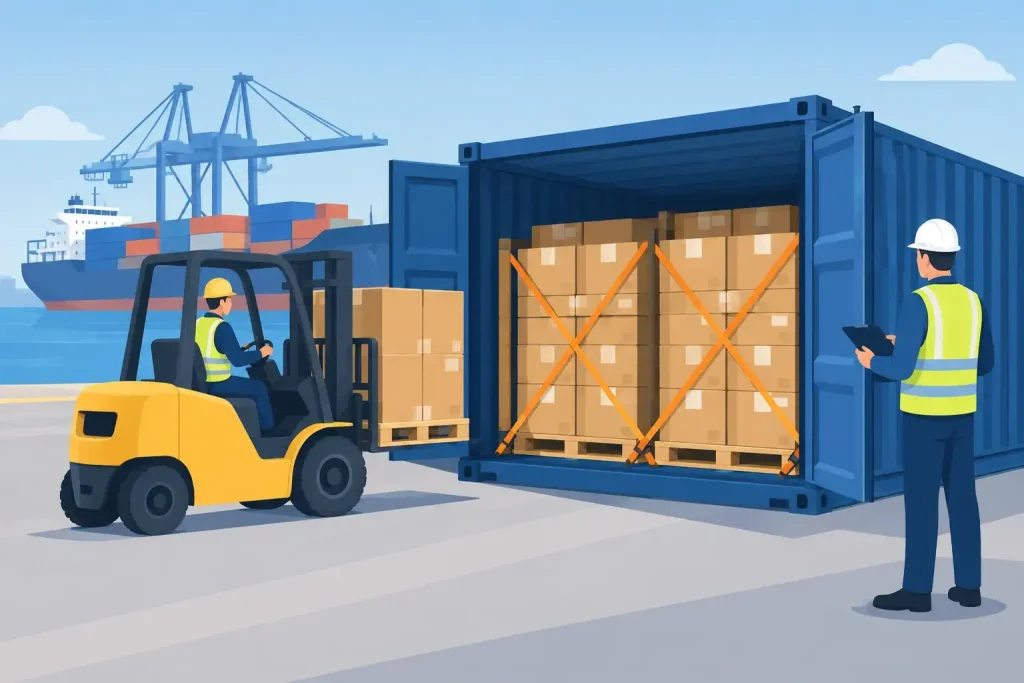
A container can leave the warehouse looking properly packed and still arrive with damaged stock, a shifted load or a compliance issue. The difference is usually in the planning before loading begins. The best container loading practices combine cargo knowledge, accurate weight control, suitable restraint and clear documentation to protect the shipment through every handling point.
For Australian importers, exporters and distributors, container loading is not simply a warehouse task. It affects freight costs, marine safety, road transport compliance, customs processes, insurance outcomes and customer delivery performance. A sound loading plan gives every party in the supply chain a clearer, safer way to handle the cargo.
Start with a loading plan, not an empty container
Container selection should be based on the cargo’s dimensions, weight, packaging strength and handling requirements. A standard general-purpose container may suit cartonised consumer goods, while machinery, oversized freight, moisture-sensitive products or awkwardly shaped items may need an open-top, flat rack, refrigerated unit or a tailored packing arrangement.
Before the container is positioned, confirm the cargo count, individual and total weights, carton or pallet dimensions, stack limits and any special handling instructions. This information allows the loading team to calculate cube utilisation without exceeding payload limits or creating unstable weight distribution.
The cheapest container option is not always the most economical outcome. A larger unit with better weight distribution can prevent damage, repacking costs and delays. Conversely, shipping too much unused space can increase freight expenditure unnecessarily. The right decision depends on cargo density, shipment frequency and the total cost of transport, not container hire alone.
Inspect the empty container before loading. Check the floor for damage, protruding nails, contamination, odours and signs of water ingress. Examine the doors, locking bars, seals, roof, side walls and corner posts. The unit should be clean, dry, odour-free and structurally sound. If there is a concern, record it with photographs and request another container before cargo is loaded.
Best container loading practices for weight control
Weight distribution is a safety and compliance requirement, not an optional refinement. Place heavier cargo low and spread it across the container floor where practical. Avoid concentrating weight at the door end, in one corner or at a single point that could overload the floor or make the container difficult to handle.
The load should be balanced from side to side and distributed along the container length. This helps maintain stability during road transport, lifting at the terminal and vessel stowage. It also reduces the chance of cargo movement when the container is braked, turned, lifted or exposed to vessel motion.
Do not rely on estimates. Weigh cargo, pallets and packing materials accurately, then keep a documented loading record. For sea freight exports, shippers must provide a verified gross mass, or VGM, before a packed container can be loaded aboard a vessel. An incorrect declaration can lead to terminal rejection, rolled cargo, additional handling charges and avoidable safety risk.
Australian road movements also require careful attention to vehicle and axle limits. A container may be within its maximum gross weight yet still create an unsuitable road transport outcome if the cargo is poorly distributed. Early coordination between the warehouse, freight forwarder and cartage provider helps identify potential issues before the container leaves site.
Use packaging and restraint that match the journey
A container is designed to carry cargo, but it does not secure cargo by itself. Products can shift during road movement, terminal handling and ocean transit unless voids are managed and the load is restrained properly.
Packaging must be strong enough for the route and the load placed above or beside it. Cartons should be suitable for stacking, pallets should be in sound condition, and shrink wrap alone should not be treated as load restraint. For heavy machinery, tiles, flooring, furniture and other high-risk freight, the packing method should account for vibration, pressure, humidity and movement in several directions.
Use appropriate restraint measures based on the cargo type. These may include dunnage, timber bracing, blocking, lashing, webbing, load bars, airbags, anti-slip materials and purpose-built frames. The aim is to prevent movement in transit without placing excessive pressure on the product or container structure.
Void space needs particular attention. Gaps between pallets and container walls can allow a load to gather momentum before it contacts the next obstruction. Fill and brace those spaces so the cargo remains stable. At the door end, create a secure barrier that prevents goods from falling when the container is opened.
Timber used in international freight may need to meet phytosanitary treatment and marking requirements. Where timber dunnage or blocking is used, ensure it is compliant with the destination country’s import rules. Failing to check this detail can result in inspection delays, treatment costs or cargo being refused entry.
Load in the correct sequence
The order of loading should reflect the delivery plan, cargo weight and accessibility. For a full container moving directly to one consignee, the focus may be maximum stability and utilisation. For freight requiring staged unloading or multiple delivery points, cargo sequence becomes more complex. Goods required first should be accessible without compromising restraint or weight distribution.
Keep clear records of what has been loaded and where it sits in the container. A packing list that merely states the number of cartons is often not enough for complex shipments. Warehouse teams, customs brokers, transport operators and receivers benefit from accurate package descriptions, marks, weights and pallet counts.
For mixed loads, separate incompatible goods and protect vulnerable items from crushing, rubbing or contamination. Do not place heavy cartons on fragile products simply because the dimensions fit. Similarly, do not stack goods beyond the packaging manufacturer’s stated limits.
Dangerous goods require an additional level of control. Classification, packaging, labels, placards, segregation and documentation must meet applicable transport and maritime requirements. These shipments should be planned with experienced dangerous goods personnel before loading, rather than adjusted after the container has been packed.
Control moisture, contamination and security risk
Container condensation can damage textiles, paper products, timber, furniture, food-related packaging and metal components. Temperature changes during ocean transit can create moisture inside an otherwise sealed container. Depending on the cargo and lane, suitable measures may include desiccants, moisture barriers, ventilated equipment or protective liners.
Do not load goods into a container that shows signs of dampness, mould, chemical residue or pest activity. Even a small contamination issue can affect an entire shipment and create biosecurity complications on arrival in Australia or at an overseas destination.
Security begins at the loading site. Restrict access to the container, supervise the packing process and record the container number and seal number accurately. Apply a high-security seal only after the final inspection. Photographing the empty container, loading stages, restraint arrangement and sealed doors creates a useful evidentiary record if a damage, shortage or insurance claim arises.
Complete checks before the doors close
A final inspection should confirm that cargo is stable, restraints are tight, voids are controlled and no packages are leaning against the doors. Check that the container number matches the booking and shipping paperwork. Confirm package counts, weights, cargo descriptions and dangerous goods details where relevant.
The person responsible for packing should be satisfied that the container can be safely opened at destination. This is often overlooked. A load that appears secure while doors are closed may still pose a risk to warehouse staff or the consignee when the seal is cut.
Documentation should be prepared promptly and consistently. Depending on the shipment, this can include commercial invoices, packing lists, VGM information, export declarations, certificates, dangerous goods paperwork and packing declarations. Clear documentation supports customs compliance and helps prevent freight from being held while basic details are clarified.
Make loading part of your wider freight plan
The best loading outcome is achieved when container packing is coordinated with collection times, port cut-offs, customs requirements, shipping schedules and final delivery arrangements. Leaving loading decisions until the truck arrives creates pressure, and pressure is where poor weight distribution, missing paperwork and inadequate restraint are most likely to occur.
For businesses managing regular imports or exports, standard operating procedures can improve consistency across warehouse teams and suppliers. A practical procedure should specify container inspection points, approved restraint materials, weight verification, photographic records, documentation responsibilities and escalation steps for damaged equipment or non-conforming cargo.
MCC World International can assist businesses in aligning container selection, freight forwarding, customs clearance, cartage and warehousing requirements so loading decisions support the complete movement of cargo. This is particularly valuable for heavy, high-value, oversized or multi-leg shipments where one packing error can affect every stage that follows.
A well-loaded container does more than protect goods on the water. It gives your operations team, carrier and customer confidence that the shipment has been planned for the real conditions of transport, from the warehouse floor to the final unload.