
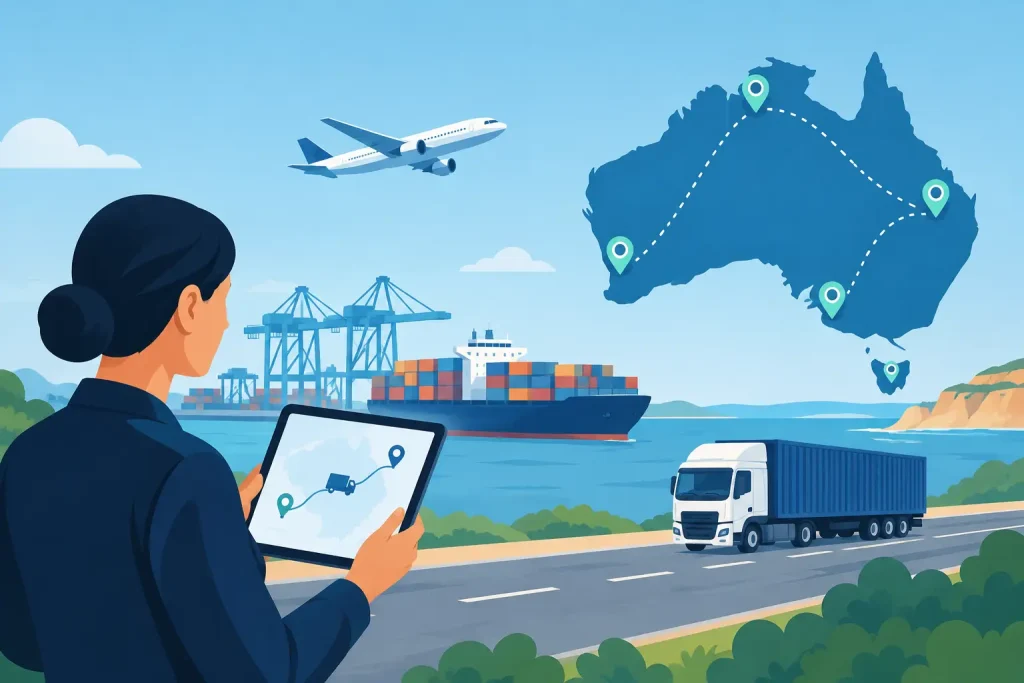
A container can be physically moving while the business relying on it is effectively blind. A missed transhipment, a customs hold or an unplanned port delay can leave purchasing, warehousing and customer service teams working from assumptions rather than facts. Cargo tracking technology gives Australian importers and exporters a clearer view of where freight is, what has happened to it, and what requires action before a delay becomes a wider supply chain problem.
For businesses moving freight into, out of or across Australia, visibility is not simply about watching a dot move on a map. It is about making better decisions around inventory, delivery bookings, customs documentation, customer commitments and transport costs. The most useful tracking systems turn shipment milestones into operational information that the business can act on.
What cargo tracking technology should tell you
At its most basic, cargo tracking technology records key events during a freight movement. For sea freight, this may include container release, receival at terminal, vessel departure, transhipment, arrival, discharge and empty container return. Air freight tracking can show cargo acceptance, flight departure, arrival, terminal availability and collection status. Domestic road movements add milestones such as pickup, linehaul departure, delivery appointment and proof of delivery.
The quality of the information matters as much as the number of updates. A useful platform distinguishes between a scheduled vessel arrival and an actual arrival, or between freight that has landed and freight that is available for collection. These are very different points in the process, particularly when customs clearance, biosecurity requirements, terminal procedures and local cartage still need to be managed.
Good visibility should answer practical questions quickly. Has the shipment departed? Has the estimated arrival time changed? Is documentation complete for clearance? Is the container available to collect? Has the final delivery been booked and completed? When these answers are available in one place, operations teams spend less time chasing multiple parties for status updates.
Why shipment visibility affects commercial performance
A freight delay rarely stays contained within the freight department. For a retailer, late inventory can mean empty shelves or lost online sales. For a manufacturer, a delayed component can interrupt production. For a project cargo client, a missed delivery window may hold up contractors, equipment and site access.
Early notice creates options. If an ocean service is running behind schedule, a business may adjust warehouse labour, defer a delivery booking, communicate revised dates to customers or consider airfreight for an urgent portion of a future order. If a shipment is held for documentation or inspection, the importer can respond before storage charges or delivery disruptions escalate.
Visibility also supports more accurate planning. Arrival dates are often used to schedule labour, allocate warehouse space and forecast stock availability. Treating an original estimated time of arrival as fixed can create avoidable pressure. Tracking data allows teams to work from current information and manage expectations accordingly.
There is a cost-control benefit as well. Containers that are not collected within free time can attract detention, demurrage, storage and related charges, depending on the circumstances and the parties involved. Tracking availability, clearance progress and delivery status helps businesses identify the next required action before deadlines are missed. It does not remove every charge or delay, but it improves the ability to prevent avoidable costs.
Not all tracking data is equally useful
Many shipping lines, airlines, terminals and carriers provide their own tracking tools. These can be valuable, especially for checking a particular leg of a movement. The challenge is that a multimodal shipment may involve several separate systems: an overseas supplier, a carrier, a shipping line or airline, a customs broker, a terminal, a cartage provider and a warehouse.
A single carrier’s portal may show that a vessel has arrived, but it may not show whether the container has cleared customs, whether a biosecurity direction is outstanding, or whether local delivery has been arranged. Similarly, a road carrier’s proof of delivery confirms the final handover but does not explain an earlier port delay.
For commercial shippers, the stronger approach is coordinated visibility across the full freight plan. This requires information from multiple parties to be interpreted in context. A status update is only useful if someone can explain its operational impact and coordinate the next step.
The difference between tracking and active freight management
Tracking is passive when it only reports an event after it has occurred. Active freight management uses those events to identify exceptions, communicate likely impacts and coordinate a response.
For example, a notification that a container has discharged at the Port of Melbourne is useful. It becomes more valuable when paired with confirmation that customs clearance is progressing, the container is available, a cartage slot has been secured and delivery can occur within free time. The objective is not more notifications. It is controlled cargo movement.
This is especially relevant for importers handling oversized machinery, time-sensitive retail stock, vehicles or project cargo. These shipments can have specialised collection, permit, storage or delivery requirements. Visibility needs to connect with the people managing those requirements, not sit separately in a dashboard.
Choosing the right level of cargo tracking technology
The right solution depends on the complexity and risk profile of the freight task. A business shipping occasional pallets by air may need clear milestone updates and responsive support. A high-volume importer with containers arriving every week may need consolidated reporting, exception alerts and visibility across multiple suppliers, origins and carriers.
When assessing a tracking capability, businesses should look beyond the appearance of the portal. Consider whether updates are timely, whether estimated arrival dates are revised as services change, and whether the information covers customs, terminal availability and local delivery rather than only the international journey.
Data accessibility also matters. Procurement and operations teams may need regular reports to compare carrier performance, assess transit-time trends or plan inventory. Finance teams may require reliable references against freight invoices and landed-cost records. Customer service teams may need accurate delivery information they can share without making promises based on outdated schedules.
A tracking system should suit the operational process already in place. A highly detailed platform can become counterproductive if no one has responsibility for reviewing exceptions and acting on them. Conversely, basic updates may be insufficient for a business where one late container causes significant downstream cost. The useful level of detail is the level that supports timely decisions.
Building a more reliable tracking process
Technology performs best when the underlying freight information is accurate. That begins before the shipment departs. Purchase order references, container numbers, house and master bills, commercial invoices, packing lists and consignee details should be consistent across the parties handling the freight. Incorrect or incomplete references make it harder to match cargo updates to the correct order or customer.
It is also worth establishing clear escalation points. A shipment may be considered at risk when an estimated arrival changes by a defined number of days, when a transhipment is missed, when documents are unavailable before arrival, or when cargo remains uncleared close to the end of free time. These triggers should reflect the business’s stock position, delivery commitments and cost exposure.
Communication should follow the same discipline. Internal teams need to know who receives routine updates, who manages exceptions and who can approve alternatives such as expedited freight, additional storage or revised delivery arrangements. This avoids duplicate enquiries and gives freight providers a clear point of contact when action is required.
MCC World International supports this process by coordinating freight movement across sea, air, road, customs and delivery stages. For businesses managing multiple providers or complex cargo requirements, having an operational partner interpret shipment status and manage the next step can be more valuable than another tracking login.
Visibility is strongest when it supports action
No tracking platform can guarantee that vessels will sail on schedule, flights will have capacity or ports will operate without disruption. Weather events, congestion, industrial action, blank sailings, inspections and equipment shortages can all affect transit outcomes. The value of cargo tracking technology is not that it eliminates these variables. It gives businesses earlier, more reliable information to respond to them.
The best result is a supply chain that is not surprised by every exception. When shipment milestones, customs progress and final delivery activity are visible and actively managed, freight becomes easier to plan around. That gives Australian businesses more control over stock, costs and customer commitments when timing matters most.