
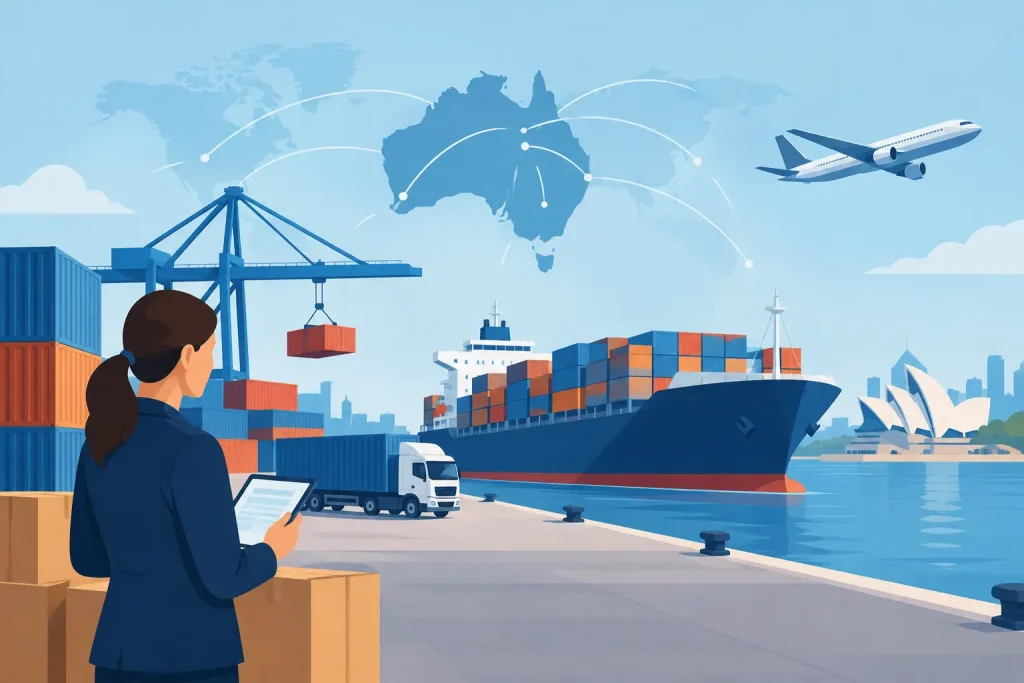
An export shipment can be commercially sound and still fail at the point of dispatch. A missed cut-off, incorrect tariff classification, unsuitable packing method or unavailable delivery slot can add days and unplanned cost. This export freight planning guide sets out how Australian businesses can prepare cargo properly, select the right transport model and maintain control from collection through to overseas delivery.
Start with the commercial requirements
Freight planning should begin before goods are packed or a purchase order is finalised. The destination, required delivery date, cargo dimensions, sales terms and product type will determine the practical freight options. A shipment of replacement machinery parts required next week needs a very different plan from a container of retail stock with a three-month replenishment window.
Confirm the agreed Incoterm early. It defines where responsibility, cost and risk transfer between seller and buyer. For example, under EXW, the buyer generally takes responsibility from the seller’s premises, while under FOB the seller’s role extends to loading the goods on board at the nominated port. DDP can place extensive delivery and import clearance obligations on the seller. The term must match the actual service capability and commercial agreement, not simply be copied from a previous invoice.
Also establish the true delivery deadline. Is it the vessel departure date, port arrival date, customs-cleared date or delivery appointment at the consignee’s warehouse? Treating these as the same date is a common cause of avoidable delay.
Build an accurate cargo profile
A freight quote and booking are only as reliable as the cargo information supplied. Provide verified package counts, dimensions, gross weight, commodity description, packing type and collection address. For sea freight, container loading requirements and whether cargo can be safely palletised or stacked also matter. For air freight, chargeable weight is often based on whichever is greater: actual weight or volumetric weight.
The cargo profile should identify anything that requires special handling. This includes dangerous goods, batteries, timber packaging, temperature-sensitive products, high-value goods, oversized machinery and cargo that cannot be loaded by standard forklift. A crate that is a few centimetres too wide for a planned loading method can trigger a last-minute equipment change and a higher transport charge.
Where cargo is fragile, establish who is responsible for export packing and whether the packaging is suitable for the complete journey, not just the first road leg. Export packaging needs to withstand handling, compression, vibration, weather exposure and possible transhipment. Timber packaging may need to meet ISPM 15 requirements for the destination market.
Choose sea, air or a multimodal solution
Mode selection is a cost, speed and risk decision. Sea freight is generally suited to larger volumes, non-urgent cargo and regular replenishment programs. Full container load freight provides control for businesses with sufficient volume, while less than container load freight can be economical for smaller consignments. However, LCL freight involves consolidation and deconsolidation, which can add handling time at both ends.
Air freight is appropriate when stock-outs, production downtime or contractual delivery dates would cost more than the higher transport rate. It is often used for urgent spare parts, samples, high-value goods and smaller commercial consignments. Air freight is fast in transit, but airport terminal processing, security screening, airline capacity and destination customs clearance still need to be planned.
Road freight is central to the export chain even where goods travel internationally by sea or air. Collection from a regional facility, delivery into a Melbourne terminal, container cartage, rail interface and final overseas distribution can all affect the final outcome. A coordinated multimodal plan reduces the risk of treating each leg as a separate task with separate accountability.
The export freight planning guide to costs and timing
A low headline freight rate does not necessarily mean a lower landed export cost. Ask for a clear breakdown of the freight movement, origin charges, terminal handling, documentation, customs brokerage, cartage, insurance, quarantine-related services and destination charges where applicable. Currency adjustments, peak season surcharges and demurrage or detention exposure should also be understood before booking.
Timing must include more than the published transit schedule. Work backwards from the required delivery date and allow for cargo readiness, pickup, packing, customs processing, terminal receival, vessel or flight cut-off, transit, transhipment, destination clearance and local delivery. During peak shipping periods, capacity constraints can make the normal schedule unreliable even when a booking has been requested.
For containerised sea freight, confirm the empty container collection window, packing date, terminal receival cut-off and shipping line documentation cut-off. Late documentation can lead to amendment fees or cargo rolling to a later sailing. For air freight, confirm airline cargo acceptance times and whether security screening is required before freight is delivered to the terminal.
Prepare export documentation and compliance
Documentation is part of freight execution, not an administrative task to leave until departure day. The commercial invoice, packing list, transport document and any certificates required by the destination should describe the goods consistently. Differences in quantity, value, country of origin or product description can delay customs clearance and create questions for the consignee.
Australian exporters should check whether their goods are subject to export controls, sanctions restrictions, permit requirements or industry-specific certification. Food, agricultural products, animal products, plants, controlled technology and defence-related goods can require additional review. Destination-country import rules may be equally significant, particularly for labelling, product registration, fumigation, health certificates or conformity requirements.
Accurate tariff classification and origin information support a compliant declaration and can affect duty treatment for the overseas buyer. Do not rely on broad descriptions such as ‘parts’, ‘samples’ or ‘general merchandise’. A practical description states what the item is, what it is made from and, where useful, its intended function.
Protect cargo and define responsibility
Cargo insurance should be considered separately from a carrier’s liability. Carrier liability can be limited by international conventions, contractual terms and the circumstances of a loss. It may not reflect the sale value of the goods or the commercial impact of damaged stock.
The appropriate cover depends on the commodity, route, packing standard, Incoterm and financial exposure. High-value electronics, tiles, furniture, machinery and project cargo each carry different risks. Photograph cargo before dispatch, retain packing records and make sure serial numbers, seal numbers and container details are recorded where relevant. These records support investigation and claims management if something goes wrong.
Responsibility also needs to be clear between the exporter, freight forwarder, customs broker, packing provider, carrier and overseas consignee. A nominated contact should be available to approve changes quickly when a shipment is held, rolled or requires amended documentation.
Use a practical pre-booking checklist
Before authorising a booking, verify the following operational points:
- The Incoterm, consignee details and required delivery date are confirmed in writing.
- Cargo weights, measurements, package count and dangerous goods status have been checked.
- Packing is export-ready and any timber, fumigation or special handling requirements are addressed.
- Commercial documents use consistent product descriptions, values and quantities.
- Export permits, destination import conditions and certificate requirements have been reviewed.
- Freight charges, cut-offs, transit assumptions and potential accessorial costs are understood.
- Cargo insurance and escalation contacts are in place.
This process is particularly valuable for first-time export lanes, new customers and shipments involving multiple suppliers. Once the lane is proven, a documented shipping instruction and standard operating procedure can make future movements faster and more consistent.
Monitor the shipment through each handover
Visibility is most useful when it drives action. Track whether cargo was collected as planned, received at the terminal, cleared for export, loaded on the intended vessel or flight, and transferred through any intermediate port or airport. Notify the buyer early if a delay affects their delivery plan. Silence until the cargo has missed its arrival date damages confidence and limits the options available.
Review completed shipments as well. Compare planned and actual transit times, accessorial charges, damage incidents and documentation exceptions. A regular exporter can use this information to adjust order lead times, consolidate freight, improve packaging or move suitable cargo from air to sea. For complex Australian export movements, MCC World International can coordinate freight, customs, cartage and supporting logistics as one managed operating plan.
The strongest export plan is the one that gives your team enough time to make decisions before cargo reaches a terminal. Start with accurate information, allow for exceptions, and treat every handover as a point that deserves confirmation.