
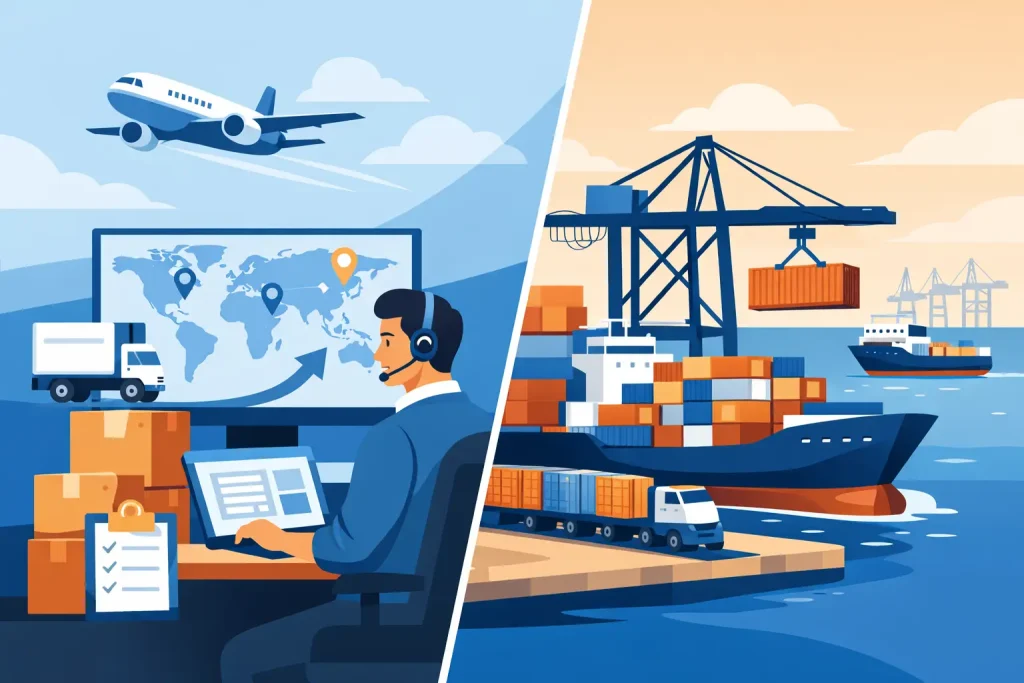
A delayed container does not become easier to manage because the booking was cheap. When comparing a freight forwarder vs shipping line, Australian importers and exporters need to consider who will manage the shipment beyond the vessel leg – including documentation, customs clearance, delivery bookings and exceptions that can affect stock availability.
A shipping line and a freight forwarder both play a role in moving cargo internationally, but they do not provide the same service. Understanding where each party’s responsibility starts and ends helps businesses choose the right model for their freight volume, cargo type and internal capability.
Freight forwarder vs shipping line: the core difference
A shipping line is the ocean carrier. It owns, operates or charters vessels and sells space on those vessels. Its primary responsibility is transporting containers or breakbulk cargo from one port to another under agreed shipping terms. Major shipping lines operate set vessel schedules, port rotations, equipment pools and terminal arrangements.
A freight forwarder coordinates freight movement on behalf of the cargo owner. The forwarder may book sea freight with a shipping line, but its role is broader: planning the movement, arranging origin handling, consolidating cargo where required, preparing or checking shipping documents, coordinating customs processes and managing delivery at destination.
Put simply, a shipping line moves the vessel. A freight forwarder manages the shipment.
That distinction matters most when freight is not a straightforward port-to-port full container load. If cargo needs collection from several suppliers, packing, export clearance, import customs processing, quarantine coordination, unpacking, storage or delivery to multiple sites, a forwarder provides a single operational point of control.
What a shipping line provides
Shipping lines are essential to international sea freight. They provide the physical ocean transport network that connects Australian ports with major trading regions across Asia, Europe, North America and beyond.
For a standard full container load, a line typically provides the container equipment, the vessel booking, loading and discharge at the nominated ports, and transport under the relevant bill of lading. Depending on the agreed terms, it may also arrange limited inland services, such as moving a container between a depot and port.
Booking directly with a shipping line can suit an experienced importer or exporter with consistent, high-volume container movements on established trade lanes. It may also suit businesses that already have dedicated teams managing supplier coordination, documentation, customs, transport and delivery bookings.
However, direct carrier rates do not always represent the full landed logistics cost. Port charges, terminal handling, documentation fees, equipment detention, container demurrage, customs brokerage, inspections and local cartage may sit outside the advertised ocean freight rate. The business also takes greater responsibility for coordinating each party involved in the supply chain.
Where the shipping line’s role usually ends
A carrier’s focus is the ocean leg and its scheduled port operations. It will communicate vessel changes, rolled bookings or equipment constraints, but it is not generally responsible for managing the commercial and operational detail of the entire cargo journey.
For example, if an importer’s container is selected for a biosecurity inspection after arrival in Melbourne, the shipping line may provide cargo release information. It will not ordinarily manage the inspection booking, customs entry, transport timing, unpack requirements or onward distribution. Those activities require separate service providers or a forwarder managing the process.
What a freight forwarder provides
A freight forwarder acts as the logistics coordinator for the shipper or importer. Rather than relying on one carrier or one mode of transport, the forwarder can build a shipment plan around the cargo, timing, budget and final delivery requirement.
This can include sea freight, air freight, road transport, warehousing and distribution. For ocean shipments, a forwarder assesses carrier schedules and service options, secures capacity, manages booking milestones and coordinates communication between overseas suppliers, carriers, depots, customs brokers, transport operators and receivers.
The value is not simply arranging a booking. It is reducing the number of operational gaps where cargo can be delayed, charges can escalate or responsibility becomes unclear.
A capable forwarder can also provide tailored options. A retailer importing floor stock may need supplier consolidation and timed delivery to a distribution centre. A machinery importer may require heavy-haul planning, specialised lifting equipment and delivery site access checks. An exporter may need cargo packed to shipping line requirements, export documentation checked and delivered to port before cut-off.
In these cases, the shipping line remains a critical supplier, but the forwarder manages the wider execution.
Documentation and compliance support
Freight documentation is commercially significant. Errors in the bill of lading, commercial invoice, packing list, tariff classification or import declaration can delay release, create unexpected costs or lead to compliance issues.
For cargo entering Australia, import processes may involve Australian Border Force requirements, duties and taxes, and Department of Agriculture, Fisheries and Forestry biosecurity controls. Requirements vary according to commodity, country of origin, packing materials and treatment history.
A freight forwarder that provides customs clearance support can coordinate these activities alongside the transport plan. This is particularly useful for businesses without an in-house logistics team, or those managing varied cargo categories and changing supplier locations. The importer remains responsible for accurate commercial information and compliance, but receives practical guidance and coordinated execution.
Comparing cost: cheapest rate versus total cost
The most common mistake in a freight forwarder vs shipping line comparison is treating the ocean rate as the entire cost of moving cargo. It is only one part of the supply chain.
A direct shipping line booking may appear less expensive where the shipment is simple and internal resources are available to manage all other steps. For regular full-container movements between the same ports, this approach can be commercially sensible.
A forwarder may offer a more competitive overall outcome where it can access suitable carrier options, consolidate services and prevent avoidable charges through active coordination. More importantly, the forwarder’s quote can be structured around the full movement rather than only the port-to-port component.
Businesses should compare like with like. Confirm whether each quote includes origin charges, destination charges, documentation, customs clearance, inspections, port costs, cartage, container unpacking, storage and delivery. Ask how detention and demurrage risks will be monitored, and who will act if the vessel schedule changes.
The best option is not always the lowest freight figure. It is the option that gives the business a predictable total cost and an accountable plan for managing exceptions.
Control, visibility and problem resolution
International freight operates around vessel schedules, port congestion, weather events, blank sailings, industrial action and regulatory intervention. No provider can remove every disruption. The practical difference is how quickly the issue is identified, communicated and managed.
With a direct carrier relationship, the importer may need to coordinate separately with the shipping line, customs broker, transport company, depot and warehouse. This can work well for businesses with established processes and sufficient internal capacity.
With a freight forwarder, those parties are managed through one contact point. The forwarder can review alternative sailings, revise delivery timing, arrange storage where appropriate and keep stakeholders informed. This creates clearer accountability, particularly when one delay affects several downstream activities.
For Australian businesses, local knowledge is valuable. Port procedures, container collection windows, metropolitan delivery restrictions and biosecurity inspection processes can materially affect the final outcome. A locally supported forwarding partner can help turn overseas shipping information into an actionable Australian delivery plan.
When should you use each option?
Use a shipping line directly when your business has regular full-container volumes, a simple port-to-port requirement and an experienced team managing all origin and destination tasks. It can be effective where routes, suppliers and delivery processes are stable.
Use a freight forwarder when the movement requires coordination across more than one provider or transport mode. This includes less-than-container-load cargo, multiple supplier collections, time-sensitive replenishment, specialised cargo, project freight, customs support and deliveries requiring careful scheduling.
Many established importers use both models. They may hold direct carrier agreements for core high-volume lanes while engaging a forwarder for overflow capacity, complex shipments, new supplier locations, air freight, domestic transport and destination management. The right structure depends on operational risk as much as freight spend.
Choosing a logistics partner for Australian cargo
Before appointing a provider, assess the shipment from origin collection through to final delivery, not just to the Australian port. Consider the cargo dimensions, commodity, Incoterms, volume, supplier readiness, transit requirement, storage needs and delivery constraints.
You should also establish who is responsible for each milestone, how charges are communicated, what support is available when a shipment is delayed and whether customs and biosecurity requirements are being managed early enough. Clear answers protect both cash flow and customer service.
MCC World International supports businesses that require this level of end-to-end coordination, combining international freight arrangements with customs clearance, cartage, warehousing and distribution planning across Australia.
A well-managed shipment begins before the container is booked. Set the responsibilities, cost inclusions and compliance requirements clearly at the outset, and your freight provider can focus on keeping cargo moving when conditions change.