
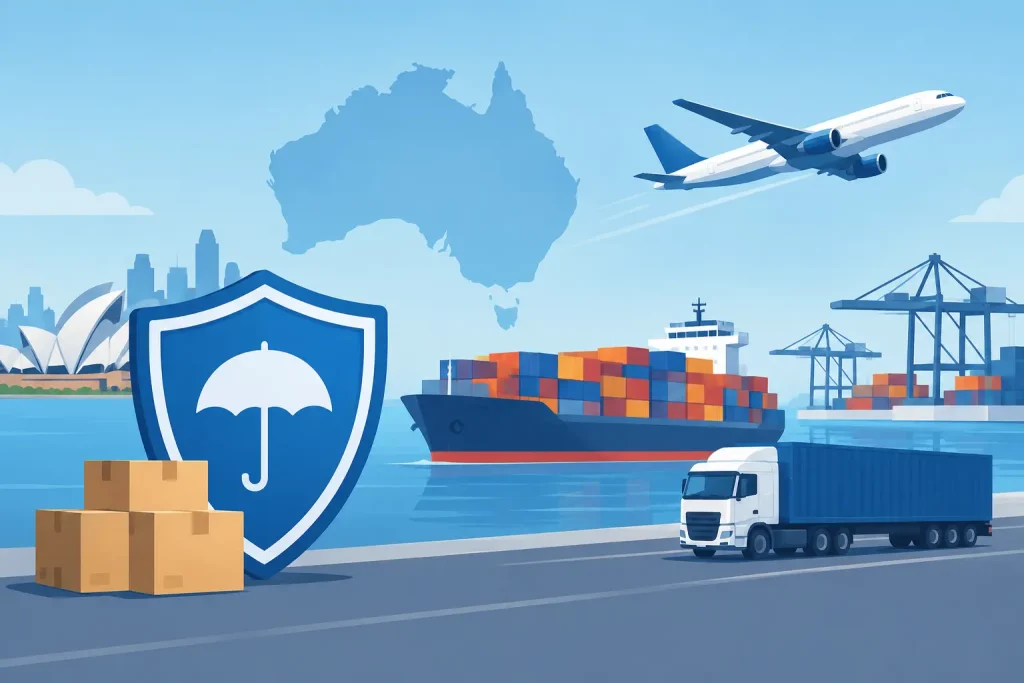
A container can leave a supplier in sound condition and arrive in Australia with water damage, pilferage or a missing pallet. The freight may have been booked correctly and the carrier may have met its contractual obligations, yet the commercial loss still sits with the cargo owner. Understanding how cargo insurance works helps importers and exporters protect stock, margin and customer commitments when freight does not go to plan.
Cargo insurance is not simply an extra line on a freight quote. It is a risk-management arrangement designed to cover physical loss of, or damage to, goods while they move through the agreed transit. For businesses shipping by sea, air, road or a combination of modes, the right policy provides a defined route to recovery rather than relying on limited carrier liability.
How cargo insurance works in practice
A cargo owner, importer, exporter or other party with a financial interest in the goods arranges cover for a declared shipment value and journey. If an insured event occurs during transit, the insured lodges a claim and provides evidence of the loss, value and cause. Subject to the policy terms, the insurer assesses the claim and pays the covered amount.
The process is straightforward in principle, but the detail matters. Cover is usually arranged either as a one-off policy for a specific movement or under an annual open cover arrangement. One-off cover can suit occasional imports, exports or high-value project shipments. Annual cover is often more efficient for businesses with regular freight movements because shipments can be declared under an agreed policy framework.
The policy should identify the goods, insured value, mode of transport, origin, destination and scope of transit. A shipment may involve factory collection, export packing, port delivery, ocean freight, customs clearance, unpacking, local cartage and delivery to a warehouse. If the intended cover only applies from port to port, a loss during domestic collection or final delivery may fall outside it. Door-to-door cover is often the more practical option where multiple parties handle the cargo.
Why carrier liability is not the same as insurance
A common assumption is that a shipping line, airline, road carrier or freight forwarder automatically pays the full value if goods are damaged or lost. In practice, carrier liability is usually limited by contract, legislation or international convention. It may be calculated by weight, package or another prescribed measure, rather than the commercial value of the goods.
For a lightweight, high-value shipment, that difference can be substantial. A damaged carton of specialised electronics, sample stock or premium retail goods may be worth far more than the carrier’s liability limit. Carriers can also rely on exclusions where they were not negligent, or where the loss resulted from circumstances outside their control.
Cargo insurance responds differently. It is arranged around the agreed insured value and policy conditions, not around the carrier’s limited liability position. After settling a valid claim, an insurer may seek recovery from the responsible carrier or party. This is known as subrogation, and it allows the cargo owner to focus on restoring their financial position without waiting for a lengthy liability dispute to be resolved.
What cargo insurance can cover
The level of cover depends on the wording selected. Broad all-risks-style cover is commonly used for general commercial cargo, although it is still subject to stated exclusions. More restricted cover may apply only to named major events, such as collision, fire, grounding or vessel sinking.
Depending on the policy, cargo insurance may respond to accidental physical loss or damage caused by events such as rough handling, impact, water ingress, theft, non-delivery, overturning of a vehicle, fire or a maritime casualty. It can also include general average. Under general average, cargo interests can be asked to contribute to extraordinary costs incurred to save a vessel and the remaining cargo during a shared maritime emergency. Even goods that arrive undamaged can be held until the required security is provided.
The insured value commonly includes the invoice value of the goods, freight and insurance costs, plus an agreed uplift to reflect anticipated profit or incidental costs. The appropriate amount depends on the sale terms, who bears risk at each point in transit and the financial exposure the business needs to protect. Underinsuring a shipment can reduce the amount payable, particularly where the policy includes an average clause.
Policy wording and packing matter
Insurance is not a substitute for proper transport preparation. Cargo must be packed, secured and stowed appropriately for the mode and route. Fragile goods need suitable internal protection, machinery may need corrosion control and timber packaging may need to meet biosecurity requirements. If inadequate packing caused the damage, a claim may be declined or reduced.
The policy wording also determines whether risks such as theft from an unattended vehicle, temperature variation, delays or storage outside the ordinary course of transit are covered. Perishable, used, second-hand, high-theft and inherently fragile goods can require tailored conditions. Businesses should describe the cargo accurately rather than assume every commodity is treated the same way.
Key exclusions to understand before shipping
No cargo policy covers every commercial setback. Normal wear and tear, inherent vice, gradual deterioration, insufficient packing, ordinary leakage and loss caused by delay are commonly excluded. Inherent vice refers to a characteristic of the goods themselves that causes deterioration or damage, such as produce spoiling naturally or metal rusting without an external insured event.
Consequential losses may also sit outside standard cover. If delayed replacement stock leads to lost sales, production downtime or a contractual penalty, the physical value of the damaged goods may be insured while the wider trading loss is not. This distinction matters for retailers managing seasonal stock and manufacturers relying on time-critical components.
War, strikes, civil commotion and political violence may require separate extensions. So can temperature-controlled shipments, high-value goods, storage at destination and certain project cargo movements. The right approach is to assess the actual exposure across the supply chain, not select cover based only on the freight mode.
What to do when cargo is damaged or missing
Fast, documented action protects a claim. At delivery, check the outer packaging, seal condition, carton count and visible condition before signing a clean proof of delivery. If damage or shortage is visible, note it clearly on the delivery receipt and take photographs before goods are moved, unpacked or disposed of.
Notify the freight provider and insurer or insurance broker as soon as possible. Keep the goods and packaging available for inspection unless they create a safety issue or must be moved to prevent further damage. A surveyor may need to inspect the shipment, particularly for substantial losses, machinery damage or marine incidents.
A claim normally requires commercial and transport records. These can include the commercial invoice, packing list, bill of lading or air waybill, delivery receipt, photographs, correspondence, survey report and evidence of the loss amount. For stolen goods, a police report may also be needed. Clear records reduce delays and make it easier to establish what was shipped, its condition and its value.
Choosing cargo cover for your supply chain
The best policy is not always the cheapest premium. A low-cost policy with narrow terms, high excesses or gaps between transport legs can create a costly surprise when a claim occurs. Start by mapping where title and risk pass under your purchase or sales contract, including the applicable Incoterms rules. Then identify the cargo value, handling points, transit duration, storage arrangements and any special risks.
Regular importers and exporters should also consider how declarations will be managed. Missed shipment declarations, incorrect commodity descriptions or outdated values can compromise cover. Integrating insurance decisions into freight booking and shipping documentation gives operations teams better control and creates a consistent record for every movement.
For complex movements, an experienced freight partner can help align the transit plan, documentation and insurance requirements. MCC World International can support businesses coordinating international freight, customs clearance and domestic delivery so risk is considered across the complete movement, not just the sea or air leg.
Cargo insurance cannot prevent a vessel delay, a forklift impact or rough weather at sea. It can, however, turn a potentially serious inventory and cash-flow disruption into a managed claims process. Before the next shipment is booked, confirm exactly where cover starts, where it ends and whether the policy reflects the value and vulnerability of the goods being moved.