
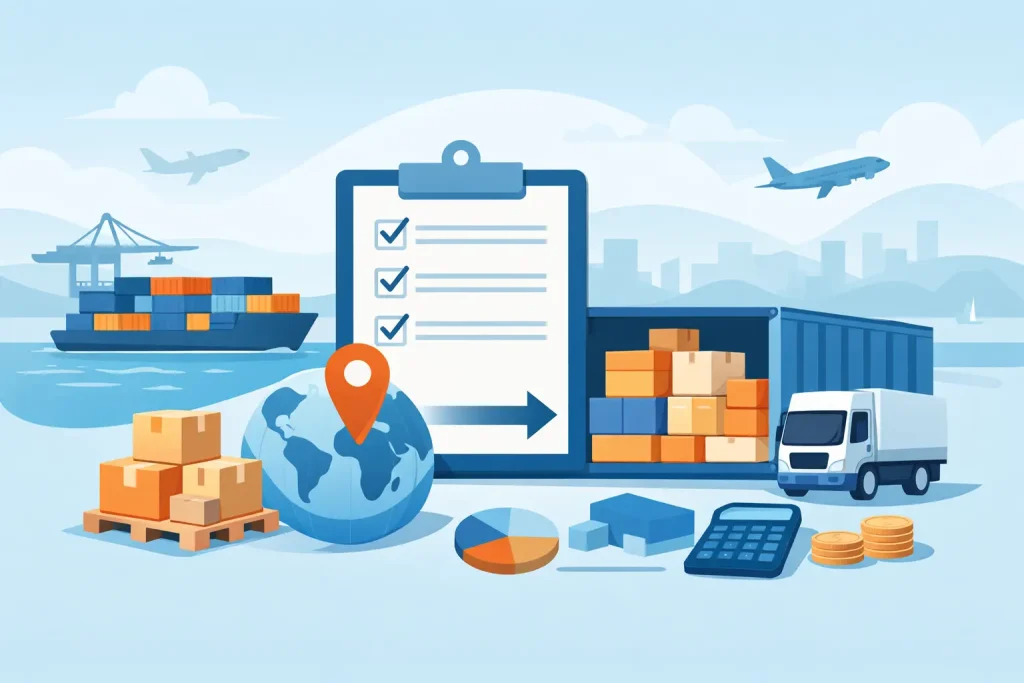
A shipment that looks inexpensive at the supplier level can become costly once every carton travels separately. Multiple origin charges, repeated customs processing, delivery bookings and warehouse receivals can quickly erode margin. Knowing how to consolidate import shipments helps Australian importers turn fragmented purchasing into a more controlled freight plan – without losing sight of stock availability, compliance or customer delivery commitments.
What import shipment consolidation means
Import consolidation combines cargo from two or more suppliers into one freight movement. The goods may be loaded into one shared less-than-container-load shipment, known as LCL, or packed into a full container load, known as FCL, once enough volume is available. Consolidation can also mean combining air freight cartons under a single planned uplift.
The purpose is not simply to fill a container. It is to reduce duplicated freight costs and handling while creating a workable arrival, customs and delivery plan. For an Australian retailer sourcing furniture from several factories in Vietnam, for example, one container can be more economical and easier to manage than four separate LCL shipments arriving on different dates.
That said, consolidation is not automatically the best option. Holding ready stock at origin until a slower supplier finishes production can create a greater commercial cost than the freight saving. The right decision depends on cargo volume, order urgency, supplier reliability, storage requirements and the cost of a delayed sale.
Consolidation is not the same as one customs entry
Cargo can move in one container while still requiring separate commercial invoices, packing lists, tariff classifications and customs treatment. Different importers of record generally require separate declarations. Goods subject to different permits, anti-dumping measures, duty rates or biosecurity conditions may also need additional planning.
A freight forwarder can coordinate the physical movement, customs clearance and local delivery as one managed programme, but the documentation must still accurately reflect each supplier and product line. Trying to simplify paperwork by combining inconsistent documents creates avoidable border delays.
Start with your purchasing calendar
The most effective consolidation programme starts before freight is booked. Map expected purchase order completion dates, production lead times and required delivery dates for the next three to six months. This reveals whether suppliers are naturally ready within a similar collection window or whether consolidation would force too much stock to wait.
Set a practical cargo-ready cut-off at origin. For example, an importer may nominate the 15th of each month as the date by which cartons must arrive at the consolidation warehouse to make the next vessel booking. Suppliers that miss the cut-off can move on the following consolidation, or ship separately if the stock is critical.
This approach gives procurement, suppliers and logistics teams a common operating rhythm. It also prevents a familiar problem: a container held for one late supplier while demurrage exposure, missed sailing dates and retail launch deadlines begin to build.
Choose the right consolidation model
The best model is driven by volume, frequency and service requirements rather than the lowest quoted freight rate.
Buyer’s consolidation
Buyer’s consolidation is suitable when one Australian importer purchases from multiple suppliers in the same country or region. Suppliers deliver cargo to a nominated warehouse, where it is checked, labelled if required and loaded together. It gives the importer stronger control over shipping frequency, container utilisation and destination planning.
This model works particularly well for regular import programmes involving textiles, flooring, tiles, retail goods or furniture. It requires clear supplier instructions, including warehouse address, delivery hours, carton labelling standards, booking references and cut-off dates.
LCL consolidation
LCL is often appropriate when total cargo volume is too low to justify a dedicated container. Your freight is combined with compatible cargo from other shippers in a shared container. It can provide a lower upfront cost and avoids paying for unused container space.
However, LCL involves more handling at both origin and destination. Charges are commonly based on cubic metres or weight, depending on which produces the higher revenue figure. For fragile, high-value or awkwardly shaped cargo, the savings need to be weighed against handling risk and destination charges.
FCL consolidation
Once combined cargo approaches a viable container volume, FCL can offer better control, fewer touchpoints and more predictable local delivery arrangements. A 20-foot, 40-foot or high-cube container may be selected according to the cargo’s cubic volume, weight, packaging and loading constraints.
FCL is not always cheaper simply because the container is full. Very heavy cargo can create road weight restrictions, while oversized machinery or unusually long items may require flat racks, open tops or project cargo planning. The loading method and delivery site access matter as much as the container rate.
Get origin handling under control
A consolidation warehouse is the operational centre of the shipment. It receives cargo from each supplier, verifies carton counts and dimensions, identifies visible damage, holds goods until the cut-off and arranges loading. The quality of this process has a direct effect on destination costs and clearance timing.
Before appointing an origin warehouse, confirm what is included in its handling scope. Receiving, palletising, carton marking, export packing, photos, storage, loading, fumigation coordination and container sealing may be charged separately. Ask how discrepancies are reported and how long cargo can be stored before additional charges apply.
Suppliers should provide final packing lists before delivery to the warehouse, not after the container has sailed. Carton counts, gross weights, measurements and product descriptions must match the physical goods. For FCL movements, a verified gross mass may also be required before the container can be loaded for export.
Build customs and biosecurity into the plan
Consolidated shipments do not reduce Australia’s import compliance obligations. Every imported product still needs correct tariff classification, customs value, country of origin information and supporting commercial documentation. Where duty concessions or free trade agreement claims are available, the evidence must be in place before clearance.
Biosecurity is a major consideration for cargo containing timber, bamboo, plant-based materials, food products, used machinery or packaging that may carry contamination. Wooden pallets and crates may require compliant treatment and markings. Used machinery can require cleaning and inspection arrangements, particularly where soil, seeds or organic material may be present.
Provide documents early enough for customs and biosecurity assessment before the cargo arrives. This is especially valuable when several suppliers are involved, as a missing invoice or unclear product description from one supplier can affect the release of the wider shipment.
Compare total landed cost, not just ocean or air freight
A sound consolidation decision compares the complete landed cost of both options. Include origin collection, warehouse receiving, storage, export documentation, loading, international freight, destination terminal charges, customs clearance, biosecurity inspection risk, unpacking, cartage and delivery appointments.
It should also include the cost of inventory waiting at origin. If one supplier’s delay holds a high-selling product for three weeks, a separate air freight top-up may be commercially sensible even when the per-kilogram rate is higher. Consolidation works best when it supports stock availability rather than becoming a rigid rule.
Ask for estimates that separate fixed charges from volume-based charges. This makes it easier to identify the point at which moving from LCL to FCL becomes worthwhile and to see whether a 40-foot high-cube container offers better value than two smaller movements.
Plan destination delivery before the cargo leaves
A container arriving in Melbourne, Sydney, Brisbane or another Australian port still needs a reliable path to its final destination. Confirm whether the delivery site can accept a container, whether it has a loading dock or forklift, and whether it requires a booked time slot. Residential-style access, tight industrial estates and sites without unloading equipment may require tailgate delivery, unpacking or a staged warehouse delivery.
For importers receiving mixed supplier cargo, deconsolidation at a warehouse can be useful. Stock can be unpacked, checked, palletised and distributed to multiple stores, customer sites or a 3PL facility. This adds a handling cost, but it can prevent congestion at your own premises and improve order fulfilment.
MCC World International can coordinate the freight, customs clearance, warehouse handling and local cartage as one managed import process, giving businesses a clearer view of cost, compliance and delivery responsibilities.
Keep measuring the result
After each consolidated shipment, compare planned and actual costs, cargo-ready dates, transit time, port delays, damage reports and supplier performance. A simple review often identifies practical improvements, such as changing the cut-off date, adjusting order quantities or removing a consistently late supplier from the programme.
The best consolidation plan is a disciplined purchasing and logistics cycle, not merely a way to fill space in a container. When suppliers, documents, freight capacity and final delivery are planned together, consolidation can reduce cost while giving your business more dependable control over imported stock.