
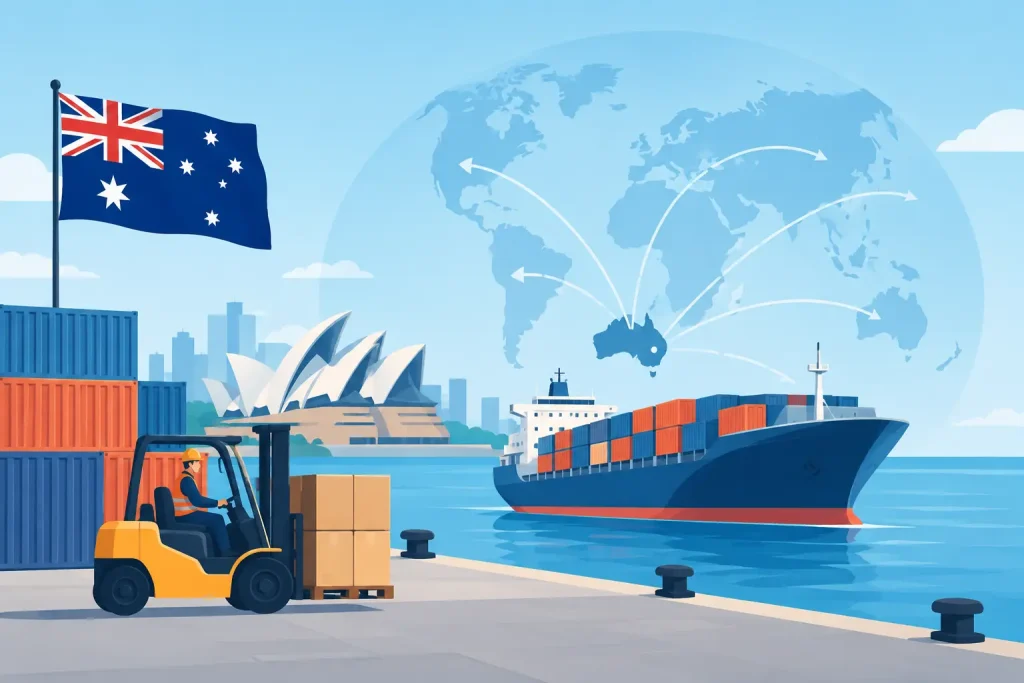
A shipment can be packed, booked and sitting at the wharf, yet still miss its vessel because a document, cut-off or packing requirement was handled too late. Knowing how to manage export freight means controlling these details before cargo leaves your facility – not reacting once it is already in transit.
For Australian exporters, effective freight management combines commercial planning with practical execution. The right transport mode matters, but so do export declarations, destination-country requirements, cargo readiness, packing standards and the handover between your warehouse, cartage provider, freight forwarder and carrier.
How to manage export freight without losing control
The most reliable export programs are planned from the sale contract backwards. Start with the product, the customer’s required delivery date and the agreed Incoterm, then build a freight plan that accounts for production, packing, collection, port or airport cut-offs, transit time and clearance at destination.
This approach prevents a common mistake: treating the vessel or flight departure date as the delivery date. Sea freight may take several weeks after departure to reach the destination port, and cargo can still face transhipment, customs processing, unpacking and final delivery. Air freight is faster, but capacity constraints, airline acceptance times and destination handling can affect the schedule.
Your freight plan should identify who is responsible for each stage, including export customs formalities, main carriage, cargo insurance, destination clearance and final delivery. This responsibility is determined largely by the Incoterm agreed with the buyer. For example, selling on FOB terms creates a different operational and cost exposure from selling on DAP or DDP terms. Do not select an Incoterm simply because it is familiar. Match it to your control over the supply chain, your customer’s capability and the markets you are serving.
Confirm the shipment requirements before you quote
A useful freight quote depends on accurate cargo information. Before requesting rates or confirming a booking, establish the number of packages, dimensions, gross weight, commodity description, cargo value, collection address, destination, required delivery date and any special handling needs.
For sea freight, cubic volume and container requirements are central to the cost. A full container load may be suitable where cargo is dense or volumes are consistent, while less than container load freight can be more economical for smaller consignments. The trade-off is that consolidated freight usually has more handling points and may operate to less flexible schedules.
For air freight, chargeable weight can be based on either actual weight or volumetric weight. A light but bulky consignment may therefore cost more than expected if it occupies substantial aircraft space. Reviewing dimensions before packing can reduce avoidable costs, particularly for retail products, machinery components and time-sensitive spare parts.
Ask for a clear breakdown of what the quote includes. Freight rates can sit alongside origin handling, documentation, terminal charges, cartage, customs processing, security screening, fuel or currency surcharges, destination charges and delivery costs. A low headline rate is not necessarily the lowest end-to-end cost. Transparent pricing allows your business to compare like with like and protect margin when quoting overseas customers.
Choose mode based on the commercial risk
Sea freight is generally the most cost-effective option for larger, heavier or less urgent cargo. It suits containerised goods, machinery, furniture, flooring, textiles and many regular export programs. Air freight is often appropriate where stock-outs, product launches, repairs or short shelf life make speed more valuable than the higher transport cost.
Road freight also plays a critical role. Your export movement starts with collection from the factory, warehouse or distribution centre, and it may require delivery to a Melbourne, Sydney, Brisbane, Adelaide or Perth terminal. The final domestic leg deserves the same planning as the international leg, especially for oversized freight, time-slot bookings and regional collections.
Get compliance and documents right early
Export documentation should be treated as a controlled process, not last-minute administration. Inaccurate paperwork can delay departure, create customs issues at destination or prevent your customer from clearing goods.
Australian exporters commonly need a commercial invoice, packing list and transport document such as a bill of lading or air waybill. Depending on the cargo and destination, you may also require a certificate of origin, insurance certificate, fumigation or treatment certificate, permit, licence or specific customer documentation. Where payment is under a letter of credit, document wording and presentation dates need exceptional care. A small discrepancy can affect payment even when the goods have been delivered.
Goods exported from Australia valued above A$2,000 generally require an export declaration, with additional requirements applying to certain prescribed goods. Product classification also matters. The correct tariff classification supports export reporting and helps your overseas customer determine duties and import controls at destination.
Check whether your product is subject to biosecurity controls, export permits, sanctions restrictions, controlled-goods rules or destination-specific labelling requirements. Timber products, food, agricultural goods, chemicals, batteries, medical products and dual-use equipment can involve added obligations. If the shipment contains dangerous goods, declare this before booking. Packaging, labelling, documentation and carrier acceptance rules are specific and cannot be resolved at the terminal gate.
Pack for the full journey, not just collection
Export packaging must protect cargo through loading, vibration, stacking, weather exposure, handling equipment and possible transhipment. A carton that survives a short local delivery may not withstand an international sea voyage or multiple warehouse movements.
Use packaging appropriate to the commodity and transport mode. Heavy machinery may need crating, blocking, bracing and corrosion protection. Fragile retail products may require internal cushioning, moisture barriers and clear handling marks. Pallets should be stable, wrapped where appropriate and suitable for forklift handling. Timber packaging used in international trade may need compliant treatment and markings.
Container loading needs disciplined weight distribution. Avoid concentrated loads that can damage the container floor or make unpacking unsafe. Secure cargo against movement and confirm that package counts, marks and weights match the packing list. For containerised sea freight, verified gross mass requirements must also be addressed before cargo can be loaded aboard the vessel.
Cargo insurance is another decision that should be made before dispatch. Carrier liability is limited and does not necessarily reflect the commercial value of your goods. Insurance can be particularly prudent for high-value cargo, fragile products, machinery, project shipments and goods moving through several handling points. The best level of cover depends on the commodity, sale terms and your appetite for risk.
Book to cut-offs, then manage the handover
Once the cargo is ready and documents are progressing, book with enough lead time to secure capacity and meet carrier cut-offs. Peak seasons, blank sailings, weather disruptions, port congestion and airline space constraints can all change the available options. Early bookings are especially valuable for full containers, oversized cargo and recurring export volumes.
A booking confirmation is not the finish line. Confirm the collection date, cargo-ready date, container packing arrangement, terminal receival window, export declaration status, dangerous goods approval if relevant, and documentation cut-off. Assign one internal contact who can make decisions quickly if a collection time changes or a document needs correction.
Provide your freight partner with complete and consistent information. Differences between the invoice, packing list, shipping instruction and physical cargo are a frequent source of delay. A structured pre-departure check gives your operations team a final opportunity to catch an incorrect consignee address, missing purchase order, wrong package count or unsuitable cargo description.
Track milestones that affect your customer
Freight visibility is most useful when it focuses on decisions, not just status updates. Track collection, terminal receival, customs clearance, departure, transhipment, arrival, destination clearance and final delivery. For critical orders, communicate exceptions early, including rolled cargo, missed connections, schedule changes or documents held for correction.
Keep records of actual transit times, accessorial charges, damage claims and recurring delays by lane, carrier and customer. Over time, this information helps you choose more reliable routings, set realistic delivery commitments and negotiate from a stronger position. It also shows where a small change in packing, booking lead time or consolidation frequency can improve supply chain performance.
For complex exports, an experienced freight forwarder can coordinate sea, air and road movements, customs requirements, warehousing and final delivery under one operational plan. MCC World International supports Australian exporters with this end-to-end control, including specialised cargo and project freight where the consequences of a missed detail are significant.
The most effective export freight process is one your team can repeat with confidence. Set clear responsibilities, build time into the plan, and address compliance and cargo readiness before the booking becomes urgent. That gives your customers a more dependable delivery experience and gives your business greater control over cost, risk and service.