
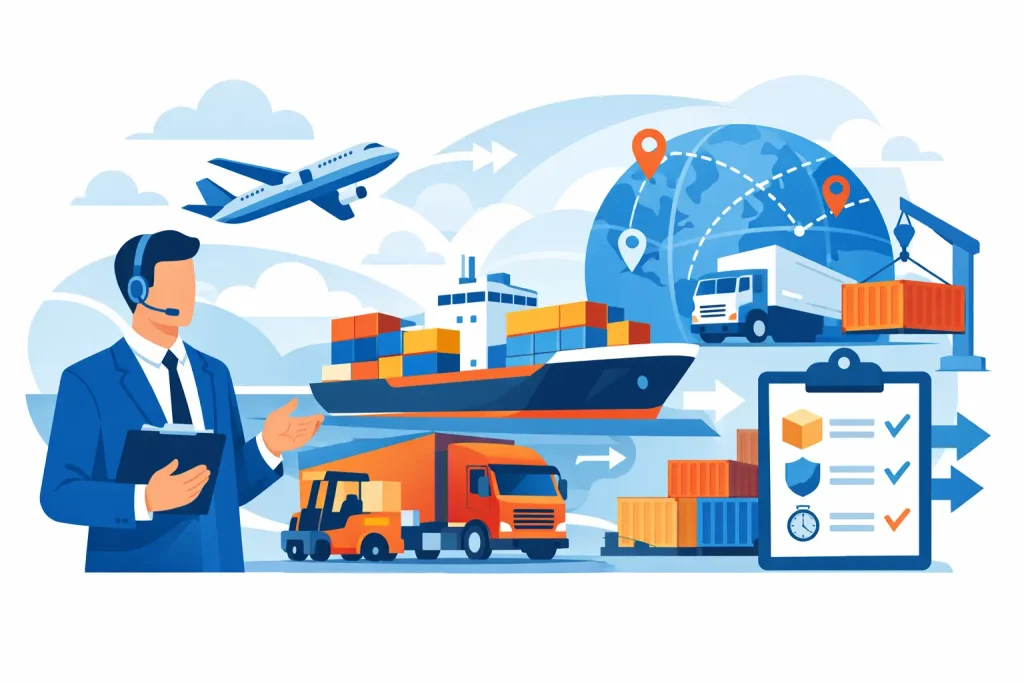
A shipment can look straightforward on paper: goods leave a supplier, cross a border and arrive at your warehouse. In practice, every handover, document, booking cut-off and customs requirement creates a point where cargo can be delayed or costs can rise. When businesses ask, “what does a freight forwarder do?”, the practical answer is that they coordinate those moving parts and take responsibility for getting freight from origin to destination with control.
For Australian importers and exporters, a freight forwarder is the operational link between suppliers, carriers, ports, airports, customs authorities, transport providers and final delivery points. Their role is not simply to book space on a vessel or aircraft. It is to plan the most suitable freight movement, manage the supporting paperwork and keep the shipment progressing through each stage.
What does a freight forwarder do from booking to delivery?
A freight forwarder arranges the movement of goods on behalf of the cargo owner. Depending on the shipment, this can involve sea freight, air freight, road freight or a combination of all three. They assess the cargo, origin, destination, timing and commercial priorities before selecting an appropriate transport solution.
For example, an importer bringing containerised flooring from Asia into Melbourne may need sea freight, port handling, customs clearance, unpacking, warehousing and local delivery. A manufacturer waiting on a critical replacement component may need air freight and urgent metropolitan delivery instead. The right solution depends on the value of the goods, required delivery date, volume, dimensions and the cost of delay.
The forwarder then coordinates the shipment through its lifecycle. This usually includes booking with the carrier, arranging collection at origin, confirming packing and labelling requirements, preparing or checking transport documentation, monitoring transit milestones and organising delivery after arrival.
A capable freight forwarder also communicates exceptions early. Weather disruption, port congestion, rolled bookings, documentation discrepancies and biosecurity inspections can affect a shipment even when the initial plan is sound. Clear updates allow businesses to adjust inventory, customer commitments and warehouse resources before a delay becomes a larger operational issue.
Freight forwarding is more than transport booking
Freight forwarders work with shipping lines, airlines, road carriers, depots, warehouses and overseas agents to create an end-to-end movement. They generally do not own the vessel or aircraft carrying the goods. Their value is in coordinating the service providers involved and managing the information that connects them.
This distinction matters. A carrier provides transport on a specific leg. A freight forwarder manages the broader freight task, including how cargo reaches the carrier, what happens at arrival and whether the shipment meets regulatory and commercial requirements.
For businesses moving goods across several locations, this reduces the need to manage multiple providers independently. Rather than chasing an overseas supplier, a shipping line, a customs broker, a cartage company and a warehouse, the importer or exporter has a central point of contact with visibility across the movement.
Selecting the appropriate freight mode
Sea freight is often the most cost-effective option for larger, less time-sensitive shipments. It is commonly used for full containers, consolidated cargo, machinery, furniture, tiles, textiles and retail stock. Transit times are longer, so planning around production lead times and sailing schedules is essential.
Air freight is suited to urgent, high-value or lower-volume goods where speed outweighs the higher transport cost. It can protect revenue when stock is needed quickly, but it is not always the right answer. Dimensional weight, airport charges and destination handling can substantially change the final cost.
Road freight connects ports, airports, warehouses, distribution centres and customers throughout Australia. It is a critical part of the plan, particularly where delivery bookings, regional access, oversized loads or time-specific site requirements apply.
For project cargo, heavy machinery, vehicles and oversized freight, the forwarder’s planning role becomes more specialised. Dimensions, weight, lifting requirements, permits, securing methods and route constraints must be assessed well before collection. A low initial freight rate is of little value if the cargo cannot be collected, loaded or delivered safely as planned.
Managing customs and compliance requirements
Customs clearance is one of the most important functions connected to international freight forwarding. Goods arriving in Australia must be declared correctly, classified under the appropriate tariff treatment and assessed for applicable duty, GST and other charges. Import conditions can also apply based on the product, country of origin and intended use.
A freight forwarder may work alongside a licensed customs broker, or provide customs brokerage as part of an integrated service. The objective is to ensure declarations and supporting documents are accurate before cargo arrives. Commercial invoices, packing lists, bills of lading, air waybills, permits and origin documents all need to align.
Biosecurity is another major consideration for Australian imports. Timber packaging, food products, plant materials, machinery, vehicles and used equipment can attract inspection or treatment requirements. Incorrect or incomplete information can lead to holds, storage charges and avoidable delays.
Compliance is not a paperwork exercise performed at the last minute. It begins when a purchase order is placed and continues through packing, export documentation, arrival reporting and final release. An experienced forwarder can identify potential issues early, when there is still time to resolve them without disrupting the supply chain.
Controlling freight costs and reducing surprises
Freight forwarding helps businesses understand the total cost of moving goods, not just the headline ocean or air rate. International shipments can involve origin charges, carrier charges, terminal fees, customs-related costs, quarantine fees, local transport, storage, inspections and delivery surcharges.
A transparent freight quote should clarify what is included, what is excluded and which costs may vary based on actual cargo details or government and third-party charges. This is particularly important for consolidated freight, where charges may be calculated by volume or weight, and for oversized cargo that needs specialised equipment.
Cost optimisation does not always mean choosing the cheapest route. A slower service may create stock shortages. A route with multiple transhipments may have a lower rate but carry greater timing risk. Conversely, paying for air freight on a small portion of urgent stock may prevent a much larger loss in sales or production downtime.
The strongest logistics decisions balance landed cost, transit reliability, inventory requirements and operational risk. A freight forwarder provides the information needed to make that decision before goods are in transit.
Warehousing, distribution and delivery coordination
The freight task does not end when cargo is cleared at the port or airport. Many businesses need goods unpacked, stored, picked, distributed to multiple locations or delivered to customers under specific booking conditions.
Freight forwarders with warehousing and 3PL capability can coordinate these stages as part of one plan. This is valuable for retailers managing seasonal stock, wholesalers supplying multiple customers and project teams receiving equipment in stages. Cargo can move from arrival to storage and onward distribution without unnecessary handling or confusion between providers.
Delivery planning also protects the final handover. A commercial site may require a booking time, tailgate vehicle, forklift access, delivery notification or specialised unloading equipment. For residential vehicle deliveries, access, handover arrangements and local transport requirements need equal attention. The final kilometre is often where a poorly planned shipment becomes expensive.
When does your business need a freight forwarder?
Businesses benefit most from a freight forwarder when freight movements involve international borders, multiple transport modes, time-sensitive stock or complex cargo requirements. Even regular importers can gain value from having a partner who monitors carrier performance, manages documentation and provides a clear escalation point when conditions change.
The level of support should match the shipment. A simple, repeat container movement may require efficient booking and dependable updates. A first-time importer may need more guidance on Incoterms, customs obligations, packing requirements and landed costs. A project cargo movement may need detailed planning across months, suppliers and transport providers.
When selecting a freight forwarder, look beyond the freight rate. Ask how they manage customs compliance, what visibility they provide, how they handle disruptions and whether they can coordinate delivery, warehousing and specialised cargo if requirements change. Local Australian knowledge matters, particularly around port processes, biosecurity expectations and domestic transport access.
MCC World International supports businesses with integrated freight forwarding, customs, transport and distribution solutions designed around the actual movement of their cargo. The purpose is simple: fewer handovers to manage, clearer information and greater control from collection through to delivery.
A dependable freight forwarder gives your business more than a shipping booking. They provide a practical layer of control around the part of your supply chain where timing, compliance and cost can quickly affect customer service and cash flow.