
A vehicle shipment can become costly long before it reaches the port or depot. A poorly matched service may leave a car exposed to weather, create avoidable handling risk, miss a project deadline or generate unexpected charges at destination. The best ways to ship vehicles depend on the vehicle’s condition, dimensions, value, route, delivery deadline and the level of control required across the movement.
For Australian businesses, the right decision is rarely just about securing the lowest freight rate. It is about selecting a transport method that protects the asset, meets import or export requirements, and provides reliable coordination from collection through to final delivery.
Best ways to ship vehicles: match the method to the cargo
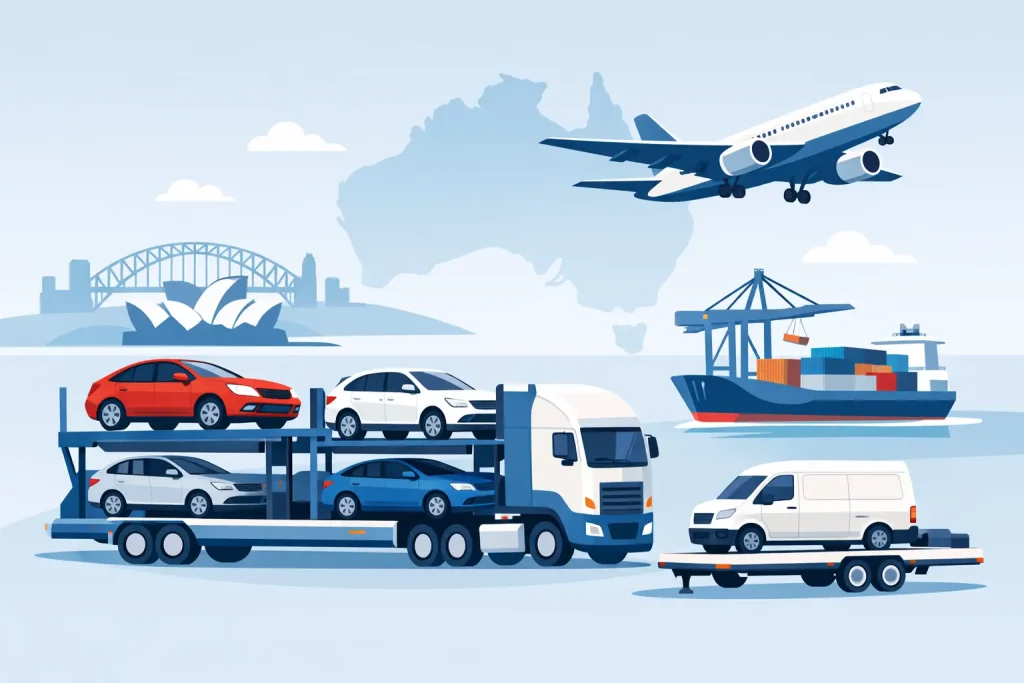
Vehicle shipping generally falls into four main methods: road transport, roll-on/roll-off sea freight, containerised sea freight and air freight. Each has a clear commercial role, but no single option suits every shipment.
Road transport for domestic vehicle movements
Road freight is usually the most practical option for moving vehicles between Australian cities, dealerships, storage facilities, project sites and regional locations. Depending on the vehicle and route, transport may be arranged on an open carrier, enclosed carrier, tilt tray or specialist low-loader.
Open vehicle carriers are generally cost-effective for standard new or used vehicles where weather exposure is acceptable. Enclosed transport offers stronger protection for prestige vehicles, restored classics, prototypes and vehicles with sensitive finishes. A tilt tray may be appropriate for a single vehicle, non-running vehicle or delivery point with limited access.
For oversized plant, trucks, caravans or specialist equipment, route planning is critical. Height, width, weight, loading method, permits and escort requirements can all affect cost and lead time. A provider should confirm these details before collection rather than treating them as exceptions once the vehicle is already in transit.
Roll-on/roll-off shipping for driveable vehicles
Roll-on/roll-off, commonly called RoRo, is designed for vehicles that can be driven or towed onto and off a purpose-built vessel. It is often a competitive choice for cars, utes, buses, trucks, motorcycles on approved arrangements, and wheeled machinery moving on major international trade lanes.
The key benefit is efficiency. The vehicle is loaded directly into the vessel’s internal decks, avoiding the need for a shipping container. For businesses moving several driveable units, this can offer attractive per-vehicle pricing and straightforward port handling.
The trade-off is that RoRo provides less individual enclosure than a container. The vehicle must also meet carrier rules regarding operability, fuel level, loose items and personal effects. RoRo schedules can be less flexible on certain routes, so it is not always the best answer where a fixed delivery window or uncommon destination is involved.
Container shipping for security and flexibility
Containerised sea freight is one of the most versatile options for international vehicle shipping. A vehicle is secured inside a 20-foot or 40-foot container, either as a sole shipment or alongside compatible cargo where permitted and properly planned.
For high-value, non-running or modified vehicles, container shipping can provide a greater level of protection from external conditions and port exposure. It is also useful where the vehicle is shipped with legitimate parts, accessories or related commercial goods, subject to customs requirements and safe packing standards.
The container must be selected carefully. A standard container may suit many passenger vehicles, while larger vehicles, machinery, boats and caravans may require a high-cube container, flat rack, open-top equipment or break-bulk planning. Incorrect measurements are a common source of delays. Dimensions should include mirrors, roof racks, modified suspension, accessories and any non-standard protrusions.
Container shipping can involve more origin and destination handling than RoRo, including packing, lashing, unpacking and empty-container return. Those costs should be visible in the quote. A lower ocean freight figure does not necessarily mean a lower total landed cost.
Air freight for urgent, high-value movements
Air freight is the premium option for vehicles or components where time has a direct commercial value. It may be used for motorsport vehicles, specialist demonstration units, urgent replacement equipment, prototypes or critical parts needed to keep a fleet or production operation moving.
Cost is the obvious limitation. Air freight is priced according to chargeable weight and available aircraft capacity, and full vehicles often require specialist loading plans. In many cases, air freight is more suitable for high-priority vehicle parts than for an entire vehicle.
Where it is justified, air freight can reduce transit times substantially. It should still be planned as an end-to-end movement, including collection, dangerous goods considerations, export documentation, arrival clearance and secure final-mile delivery.
Choosing between cost, speed and protection
A practical freight plan starts by identifying what cannot be compromised. If the vehicle must arrive for a launch, project mobilisation or auction date, schedule reliability may carry more value than the cheapest freight option. If it is a rare or high-value asset, protection and controlled handling may take priority.
Businesses should assess four operational questions before requesting a quote:
- Is the vehicle driveable, and are there any mechanical, battery or fuel restrictions?
- What are its verified dimensions, weight and declared value?
- Does it need to travel alone, or can it move within a consolidated shipment?
- Is the delivery date fixed, or is there flexibility around vessel and carrier schedules?
Answers to these questions allow a freight forwarder to recommend a method based on the full movement rather than providing a headline rate that excludes important handling or compliance costs.
International shipping requires early compliance planning
Importing or exporting a vehicle involves more than booking transport. Australia has strict requirements around biosecurity, customs declaration, import approvals and applicable taxes and duties. The exact obligations vary according to the vehicle type, country of origin, age, value, intended use and whether it is being imported permanently or temporarily.
For inbound vehicles, cleanliness is particularly important. Soil, plant material, insect contamination and organic debris can trigger biosecurity inspection, treatment or cleaning requirements. Underbody areas, wheel arches, engine bays and interiors should be checked before departure. A vehicle arriving in poor condition can incur delay and additional charges while it is held for assessment or treatment.
Documentation must also be accurate and consistent. Common freight documents include a commercial invoice, packing list where relevant, bill of lading or air waybill, proof of ownership, vehicle identification details and import approvals where required. For commercial shipments, values and descriptions should reflect the actual transaction. Incomplete or inconsistent paperwork increases the risk of customs queries and clearance delays.
A capable freight partner can coordinate customs clearance alongside international transport, helping ensure the shipment is planned around both the physical movement and the regulatory process. This is particularly valuable when vehicles are one part of a broader import programme involving stock, machinery, retail goods or project cargo.
Protect the vehicle before it moves
Condition reporting is a simple control with significant value. Before collection, record the vehicle identification number, odometer reading, fuel level and visible condition. Take clear, dated photographs of all sides, the interior, wheels, glass and any existing damage. This creates a reliable reference point at each handover.
Remove personal belongings and unsecured items unless they have been approved as part of the freight arrangement. Loose accessories can be damaged in transit, complicate biosecurity checks and fall outside the carrier’s accepted cargo terms. Alarms should be disabled or instructions supplied, and keys should be labelled and managed through a documented handover process.
Insurance should be considered separately from carrier liability. Freight carrier terms may limit compensation based on weight, contractual limits or specific exclusions. Cargo insurance can provide more appropriate protection for the declared value of the vehicle and should be arranged before the shipment commences.
Build the delivery plan beyond the port
Port-to-port freight is only one stage of the process. A complete vehicle movement may require collection from a seller or factory, depot receival, export packing, sea or air freight, customs and biosecurity clearance, unpacking, local cartage and final delivery. Each handover introduces a potential delay if responsibilities are unclear.
This matters especially for interstate distribution, imported fleet vehicles and project equipment. Final delivery locations may have restricted access, limited unloading space, booking requirements or specific site induction rules. Planning these details early prevents a vehicle from reaching the destination city without a workable delivery solution.
MCC World International coordinates vehicle movements through integrated sea, air and road freight services, with customs and delivery planning managed as part of the wider supply chain. That approach gives businesses clearer control over timing, cost and accountability across complex domestic and international movements.
The most effective vehicle shipping decision is made before the vehicle is collected: confirm the service method, document its condition, validate compliance requirements and plan the final delivery as carefully as the main freight leg. That preparation protects both the vehicle and the commercial outcome behind it.