
When a production line is waiting on parts, a retailer needs fast stock replenishment, or a time-sensitive export has a narrow delivery window, speed stops being a convenience and becomes a commercial requirement. That is usually the point at which businesses start asking, what is air freight transportation, and whether it is the right fit for their supply chain.
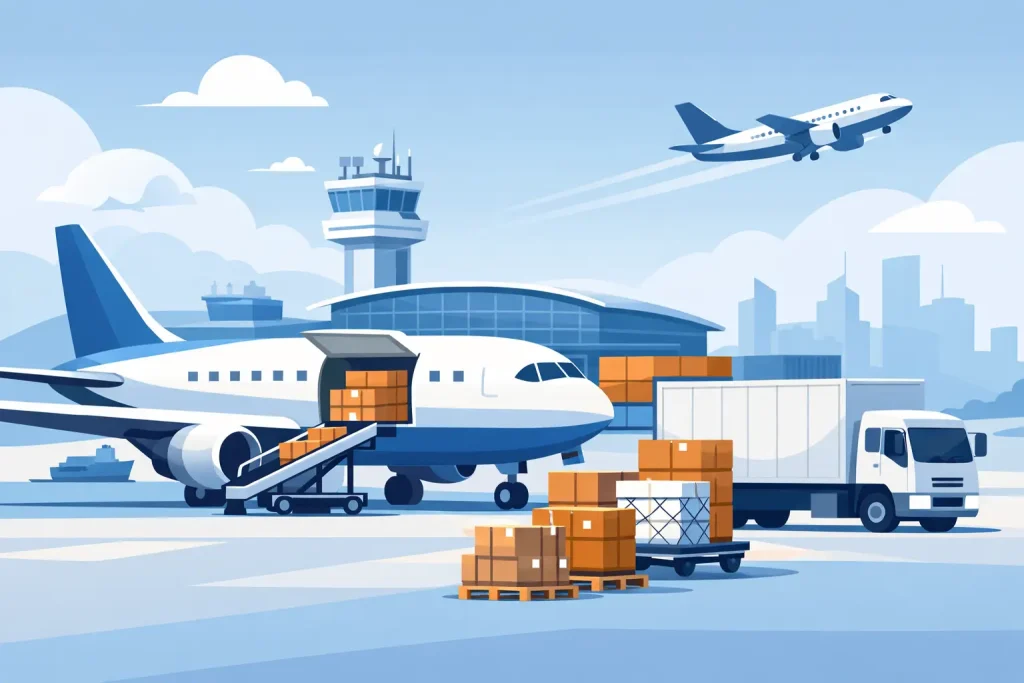
Air freight transportation is the movement of cargo by aircraft, either on dedicated freighter planes or in the cargo hold of passenger flights. It is used to move goods quickly across domestic and international routes where transit time matters more than the lower cost typically available through sea freight. For Australian importers and exporters, it is often the preferred option for urgent, high-value, perishable or time-critical cargo.
That simple definition only tells part of the story. In practice, air freight is not just about putting freight on a plane. It involves booking airline capacity, preparing freight to airline and border requirements, managing customs documentation, coordinating airport handling, and arranging pickup and final delivery. For many businesses, the value of air freight comes from the control it provides across that entire chain.
What is air freight transportation used for?
Air freight is best suited to cargo that benefits from shorter transit times or reduced inventory risk. Electronics, medical supplies, fashion items, spare parts, urgent commercial samples, specialised machinery components and seasonal retail stock are all common examples. If a delayed shipment could stop operations, miss a launch date or create a contractual issue, air freight becomes commercially sensible even if the rate per kilogram is higher.
It is also used when stockholding costs are a bigger concern than transport spend. A business importing smaller, higher-value consignments may prefer to move goods by air and hold less inventory locally. That can improve cash flow, reduce warehousing pressure and give procurement teams more flexibility. The trade-off is obvious – air freight is faster, but usually more expensive than sea freight.
There are also cases where air freight is simply not the right option. Very heavy, oversized or low-value cargo often moves more efficiently by sea or road. If the product is not urgent and transport cost is the main priority, air freight may add cost without adding enough business value.
How air freight transportation works
The process usually begins with a booking based on shipment details such as dimensions, weight, cargo type, origin, destination and required delivery timing. Airlines and freight forwarders assess whether the shipment can move as general cargo or whether it needs special handling. Some goods require temperature control, dangerous goods declarations or specific packing standards.
Once the booking is confirmed, the cargo is collected or delivered to a receival point, then checked, weighed and prepared for air transport. This may include security screening, palletisation, labelling and documentation review. For international cargo, customs clearance on both the export and import side is a key step. Errors in tariff codes, declared values or supporting documents can delay even the fastest shipment.
After airline uplift, the freight moves to the destination airport, where it is unloaded, processed through customs and quarantine where required, and then transferred for final delivery. This means transit time is not just flight time. The total movement includes pre-carriage, terminal handling, customs processing and last-mile transport.
That is why experienced coordination matters. A shipment can leave Melbourne or Sydney on schedule and still miss the required delivery window if paperwork, collection timing or destination handling is not managed properly.
Air freight services and shipment types
Not all air freight moves the same way. The service level depends on urgency, cargo profile and budget.
Express air freight is the fastest option and is generally used for highly urgent shipments. This may involve priority airline uplift and accelerated handling through the freight chain. Standard air freight is more economical and still significantly faster than sea freight, making it suitable for many regular import and export consignments.
Consolidated air freight combines cargo from multiple shippers into one larger movement. This can reduce costs, but it may add some handling time because the freight needs to be grouped and unpacked at either end. Direct or back-to-back shipments are often chosen for sensitive, valuable or urgent goods that should move under a single shipment profile.
There is also a distinction between general cargo and specialised cargo. Perishables, dangerous goods, oversized equipment and fragile freight each come with their own airline acceptance rules and handling requirements. For commercial shippers, understanding those requirements early is essential because a packing issue or missing declaration can stop cargo at the terminal.
Why businesses choose air freight
The main advantage is speed, but speed is only part of the commercial benefit. Faster transit often means better supply chain responsiveness. A business can react to demand spikes, replace delayed stock, support customer deadlines or reduce downtime from missing parts.
Air freight can also improve reliability on certain lanes, especially when compared with long ocean transit schedules that may involve port congestion, transhipment delays or seasonal disruption. Shorter transit times also reduce the period in which goods are exposed to handling and environmental risk, which can be relevant for sensitive or high-value products.
For Australian businesses, air freight is often part of a broader freight strategy rather than a standalone solution. A company may use sea freight for regular replenishment and air freight for urgent top-up stock. That blended approach can balance cost control with service continuity.
Costs, weight and pricing realities
Air freight is commonly priced on chargeable weight, which is the higher of actual weight or volumetric weight. This matters because lightweight but bulky cargo can still attract a high freight charge. Cartons of retail goods, promotional materials or soft furnishings sometimes surprise importers for this reason.
Beyond the airfreight rate itself, businesses also need to account for terminal fees, fuel and security charges, customs clearance, local cartage and any quarantine or inspection costs. The cheapest quoted airline rate does not always produce the lowest end-to-end landed cost.
Pricing can also shift quickly based on capacity, seasonality, route demand and disruptions. Peak retail periods, reduced flight schedules and global events can all tighten capacity and push rates up. For that reason, planning ahead where possible still matters, even when using a fast mode like air freight.
Compliance and risk considerations
Air freight is tightly regulated. Cargo must meet airline security standards, export and import documentation rules, and any product-specific controls that apply to the commodity. In Australia, border compliance is especially important for imported goods that may trigger biosecurity checks, customs duties or permit requirements.
Dangerous goods are a good example of where assumptions create problems. Items such as lithium batteries, aerosols, chemicals and some machinery components may be restricted or require formal declaration and approved packing. A shipment that seems straightforward from a commercial point of view may need specialist review before it can travel by air.
This is where working with a freight forwarder adds practical value. The role is not limited to arranging a booking. It includes checking shipment suitability, aligning documents, managing customs processes and coordinating the full movement so the cargo is not delayed by avoidable compliance issues.
When air freight transportation makes sense
The answer depends on the value of time in your business. If a delayed shipment could stop sales, interrupt production or damage customer relationships, air freight often justifies its cost. If the goods are low value, bulky and not urgent, it usually does not.
A useful way to assess it is to compare the freight premium against the business impact of waiting. That impact might include lost revenue, downtime, contractual penalties, stockouts or excess local inventory. Once those costs are visible, the air versus sea decision becomes less about freight alone and more about supply chain performance.
For many Australian importers and exporters, the best result comes from using air freight selectively and strategically. That means reserving it for urgent orders, critical components, product launches, replacement stock and high-priority export movements, while relying on other modes for routine volume.
At MCC World International, that practical view matters because freight decisions are rarely made in isolation. They affect customs timing, warehousing, local delivery, inventory planning and customer commitments. Air freight works best when it is integrated into the wider logistics picture rather than treated as a quick fix.
If you are weighing up whether air freight is the right move, start with the business outcome you need, not just the transit time. The right transport mode is the one that keeps your cargo moving, your compliance intact and your operation on schedule.