
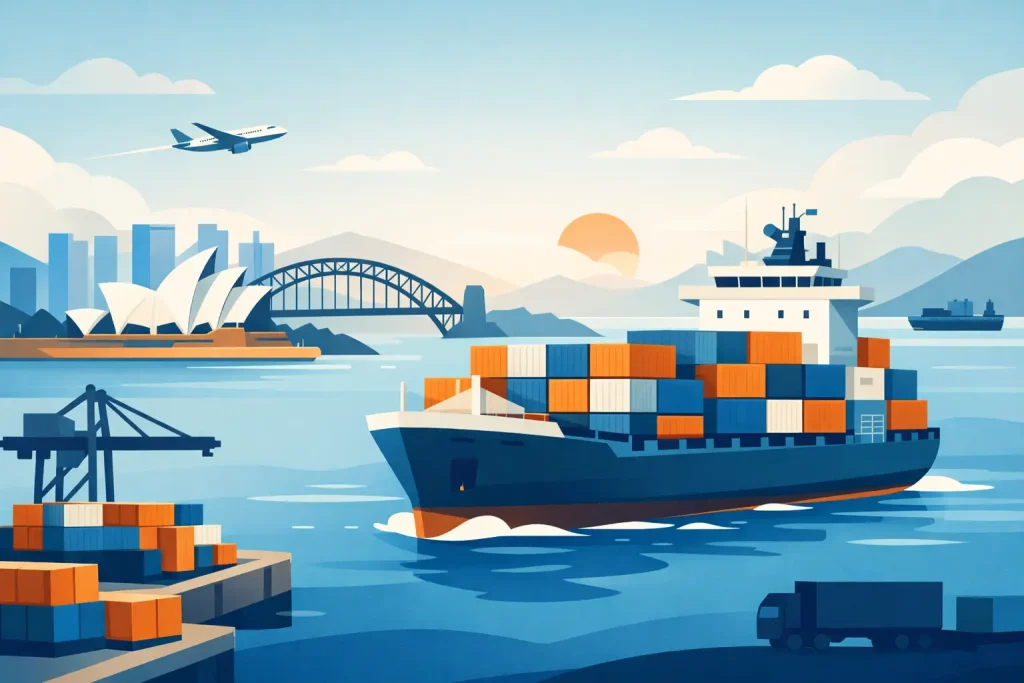
When a container misses a production window, the problem rarely stays at the port. It reaches purchasing teams, warehouse schedules, customer delivery promises and cash flow. That is why sea cargo services matter well beyond the shipping leg itself. For Australian businesses importing, exporting or managing multi-leg freight movements, the right sea freight plan is not simply about finding vessel space. It is about controlling risk, cost and timing across the supply chain.
Australia’s geography makes sea freight a practical foundation for many international cargo programs. It remains one of the most cost-effective options for moving high-volume freight, palletised cargo, bulky products, project cargo and many commodity-based shipments. But cost alone should not drive the decision. Transit times are longer than air freight, schedules can shift, and compliance requirements can quickly complicate what looks simple on paper.
What sea cargo services actually cover
Sea cargo services usually extend far beyond port-to-port transport. For most commercial shippers, the shipment only works if the surrounding tasks are managed properly. That includes origin collection, export documentation, booking management, container packing advice, customs clearance, biosecurity coordination, local cartage, unpacking support, warehousing and final delivery.
This matters because sea freight failures often happen in the handover points. A shipment can be booked correctly and still face delay if the packing list is inaccurate, the tariff classification is wrong, the consignee details do not match the commercial invoice, or the container is not available for unpack within the required window. End-to-end coordination reduces those gaps.
For Australian importers in particular, sea freight is closely tied to customs compliance and landed cost planning. Duties, GST, port charges, terminal fees, transport costs and storage exposure all need to be understood before the cargo departs, not after it arrives.
When sea cargo services are the right fit
Sea freight makes commercial sense when cargo volume is too large for air, when the goods are not urgently required, or when the landed cost needs tighter control. Retail stock replenishment, furniture, flooring, textiles, machinery, tiles, spare parts and vehicle movements are common examples. Businesses shipping regularly can also gain stronger cost predictability when sea freight is built into a planned logistics cycle rather than booked ad hoc.
That said, sea freight is not automatically the best choice for every shipment. If the cargo is high-value, time-sensitive or needed to prevent a production stoppage, air freight may be more economical in real terms despite the higher rate. The right mode depends on the cost of delay, not just the freight charge.
Seasonality also matters. Peak shipping periods, blank sailings and equipment shortages can affect transit reliability. Businesses with narrow delivery windows often need a mix of sea, air and domestic transport options rather than relying on one mode alone.
Sea cargo services and container options
The most common sea freight structure is either full container load or less than container load. FCL generally suits businesses moving enough cargo to use most or all of a container, or those wanting better control over handling and transit exposure. LCL can work well for smaller shipments that do not justify a full container, but it typically involves extra consolidation and deconsolidation steps, which can affect transit time and handling risk.
Container type also needs to match the cargo. Standard dry containers suit most general freight, while flat racks, open tops and specialised equipment may be required for oversized machinery, project cargo or out-of-gauge shipments. For some businesses, the real challenge is not vessel booking but designing a transport plan that can move non-standard cargo legally and safely from supplier to site.
This is where experience matters. An oversized shipment may require route planning, permits, lifting coordination, wharf handling arrangements and specific packing methods. If any one of those elements is missed, the shipment can stall before it reaches its destination.
Compliance is not a side issue
In Australian freight, compliance has direct operational and financial consequences. Sea shipments are subject to customs requirements, import declarations, tariff classifications, valuation rules and, depending on the goods, biosecurity controls and other regulatory checks. Errors can lead to delays, inspections, additional charges and avoidable disruption to stock availability.
Commercial shippers often underestimate how closely documentation quality affects cargo movement. A vague product description, inconsistent invoice value or incorrect origin declaration can trigger questions that slow down release. The risk is even higher for mixed cargo, specialised products, timber packaging, machinery and goods with treatment or permit requirements.
A dependable freight partner should treat compliance as part of the transport plan, not an afterthought. That includes reviewing documents early, flagging possible clearance issues before departure and aligning shipping data across suppliers, carriers and customs processes.
Why local coordination in Australia makes a difference
International shipping is only one part of a successful freight movement into Australia. Once cargo lands, businesses still need it cleared, collected, transported and delivered without unnecessary dwell time or storage costs. Delays on the local side can erode any savings achieved on the ocean rate.
For importers moving freight into Melbourne, Sydney, Brisbane, Adelaide, Perth or other major centres, local knowledge matters. Different terminals, delivery windows, container detention conditions and transport constraints can change the best handling method. A practical logistics approach looks at the full path from vessel arrival to final delivery point.
This is also where integrated service capability becomes valuable. When sea freight, customs clearance, cartage and warehousing are coordinated together, there is less fragmentation and better visibility. Instead of multiple parties working in isolation, the shipment is managed as one operational chain.
Cost control is more than the ocean rate
Many businesses compare sea cargo services on the quoted freight charge alone. That can be misleading. The true cost sits across the full landed profile, including origin charges, destination handling, customs processing, delivery, container-related fees, storage risk and timing impact on inventory.
A lower rate can become expensive if the service level is poor, documentation is not managed properly, or local delivery falls outside the required timeline. Equally, the fastest or most direct option may not be necessary for cargo that has flexible demand. Good planning starts with the commercial objective. Is the priority to reduce per-unit landed cost, protect stock availability, support a new product launch, or move oversized cargo without disruption?
The answer changes the freight design. Some shipments benefit from fixed scheduling and long-range booking discipline. Others need flexibility for supplier readiness, split deliveries or combined warehousing and distribution. There is no single best model for every importer or exporter.
Choosing a provider for sea cargo services
The strongest provider is rarely the one offering a booking alone. Businesses generally need a partner that can assess shipment suitability, manage carrier relationships, coordinate customs and provide realistic advice when trade-offs arise. Reliability is built through accurate documentation, clear communication, escalation control and local execution, not just access to vessel space.
Ask practical questions. Can the provider handle both standard freight and specialised cargo? Do they have experience with Australian customs and local delivery coordination? Can they support container freight, LCL, oversized machinery, retail stock and project cargo under one operating framework? Most importantly, will they give you a clear view of risks before the shipment moves?
For many Australian businesses, that level of support is the difference between freight that simply travels and freight that performs commercially. MCC World International works in that space – combining sea freight coordination with customs, transport, warehousing and specialised logistics support so businesses can manage imports and exports with greater control.
A smarter way to use sea freight
Sea freight works best when it is planned as part of the wider supply chain rather than treated as a standalone purchase. Businesses that get strong results from sea cargo services tend to forecast better, document better and align freight timing with sales, production and warehousing needs. They also build contingency into their transport planning, especially where delays would affect customers or site operations.
For some, that means shifting routine stock onto sea freight while reserving air freight for urgent exceptions. For others, it means redesigning container utilisation, reviewing supplier packing standards or improving local delivery coordination to reduce unnecessary costs after arrival.
The practical goal is simple. Use sea freight where it strengthens margin, supports continuity and keeps cargo moving with fewer surprises. When that happens, shipping stops being a reactive expense and becomes a more controlled part of business performance.
If your freight task is growing in volume, complexity or compliance exposure, the best next step is usually not a cheaper quote. It is a better plan.