
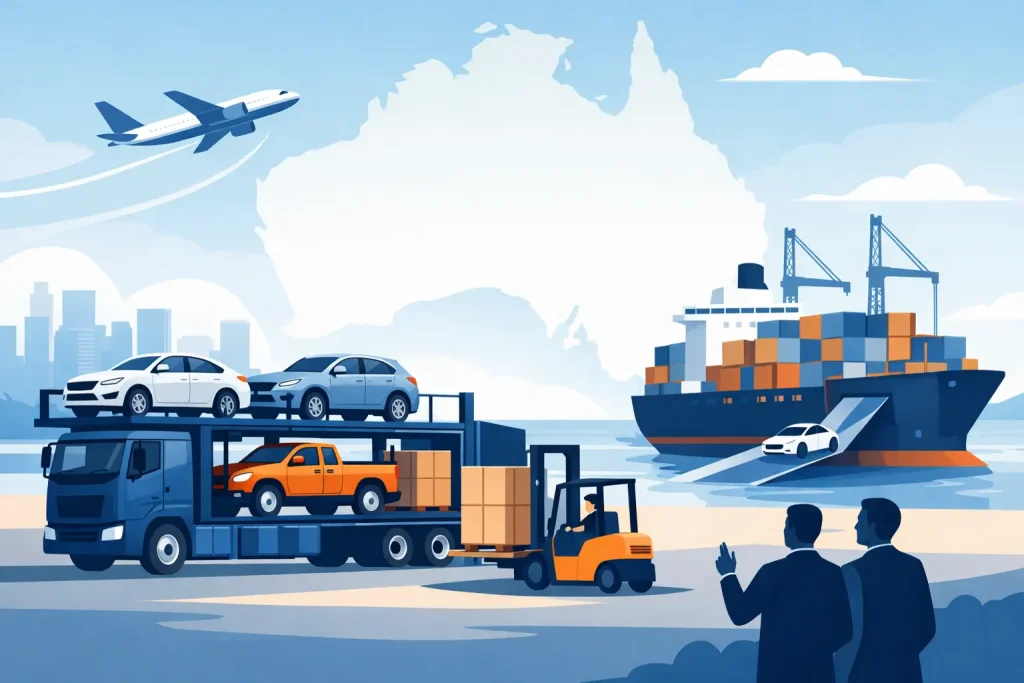
A vehicle is rarely just a vehicle in a commercial supply chain. It may be saleable stock, a specialised work asset, a customer delivery, or part of a wider import program. Vehicle shipping Australia requires more than booking space from point A to point B. The right plan must account for the vehicle’s condition, dimensions, value, route, handover points, customs obligations and the time it can spend out of service.
For importers, dealers, manufacturers, project teams and fleet operators, freight coordination is where cost control and reliability are won or lost. A clear transport plan reduces handling risk, prevents avoidable delays and gives the business a defined point of accountability across each stage of the movement.
Choosing the right vehicle shipping Australia method
The best transport method depends on the vehicle type, its origin and destination, urgency, volume and required level of protection. There is no single shipping option that suits every consignment.
For international movements, vehicles are commonly shipped by roll-on roll-off, known as RoRo, or in a shipping container. RoRo is generally suited to operational vehicles that can be driven on and off the vessel. It can be an efficient option for standard cars, commercial vehicles, machinery and certain caravans, particularly where the shipment does not need containerisation.
Container shipping provides greater protection from weather and external handling and is often preferred for high-value cars, motorcycles, classic vehicles and vehicles moving with approved accessories or parts. Depending on the dimensions, a vehicle may travel in a 20-foot or 40-foot container, either as a sole consignment or within a professionally managed consolidation. Container loading must be planned carefully, with correct securing, battery preparation and documentation of the vehicle’s condition before packing.
Domestic road freight is commonly used to move vehicles between ports, storage facilities, dealerships, project sites and regional destinations. Open carriers can be cost-effective for standard vehicles on well-serviced routes. Enclosed transport may be more appropriate for prestige, collector or sensitive vehicles where additional protection is required. The right choice comes down to the commercial value of the asset and the level of exposure the business is prepared to accept.
Cars, motorcycles, boats and caravans have different requirements
A standard passenger vehicle and a trailerable boat may both be described as vehicle freight, but their handling needs can be very different. Motorcycles need secure bracing and protection against movement. Boats may require cradles, accurate measurements and specialised lifting arrangements. Caravans require careful assessment of height, width, length and towing configuration before a route or carrier is confirmed.
Oversized items introduce another level of planning. A vehicle or vessel that exceeds standard road dimensions may need permits, route assessment, pilot vehicles or timed delivery arrangements. These requirements should be identified before collection, not after the cargo reaches the wharf or depot.
Cost is shaped by more than the freight rate
Businesses often begin with the ocean or road freight price, but the total landed transport cost has several moving parts. The base rate matters, yet it is only one component of a properly costed shipment.
International vehicle movements may include origin collection, export handling, sea freight, terminal charges, destination port fees, customs clearance, biosecurity inspection, unpacking or delivery from a container terminal, and final road transport. Domestic movements may include carrier fees, fuel-related charges, depot handling, regional delivery surcharges and specialised loading costs.
Vehicle dimensions can have a significant effect on pricing. A larger ute, caravan or boat may occupy more space than a standard car and attract higher freight or handling charges. The same applies where loading equipment, non-standard securing or special delivery access is required.
The lowest initial quote is not always the lowest total cost. A quote should clearly identify what is included, where potential additional charges may arise and which party is responsible for customs, terminal, inspection and delivery costs. Transparency matters because unexpected charges can undermine margins, particularly for importers managing regular stock flows.
Documentation and compliance need to be resolved early
International vehicle shipping is closely connected to customs and biosecurity requirements. Australia has strict import controls, and incomplete or inaccurate paperwork can delay cargo, create extra storage costs or prevent release from the border process.
The required documents will depend on the shipment, but commercial consignments generally need a commercial invoice, packing information, bill of lading or sea waybill, and supporting evidence of ownership or purchase. Importers may also need to consider tariff classification, customs value, duty, Goods and Services Tax, applicable free trade agreement eligibility and vehicle import approval requirements.
Cleanliness is a practical compliance issue, not a cosmetic one. Vehicles, boats, caravans and machinery arriving from overseas can be inspected for soil, plant material, insects and other biosecurity risks. Attention should be given to wheel arches, tyres, undercarriages, engine bays, interiors and any areas where organic material can collect. A vehicle that appears clean at collection may still require additional treatment if contamination is found on arrival.
For commercial shippers, the most reliable approach is to bring customs and freight planning together from the start. This gives the logistics provider time to identify missing documents, check potential clearance requirements and coordinate delivery after release. MCC World International supports this integrated approach by coordinating freight, customs clearance, transport and delivery as one managed operation.
Preparing a vehicle for transport
Good preparation protects the asset and creates a clear record of its condition before it enters the transport chain. This is particularly important when the vehicle is travelling through several handover points, such as collection, port receival, vessel loading, destination discharge and final delivery.
Before collection, record the vehicle identification number, odometer reading and visible condition. Date-stamped photographs of all sides, the interior, wheels, windscreen and any existing marks provide useful evidence if a question arises later. Confirm whether loose accessories, personal effects, tools or stock are permitted. In many cases, these items should not be left in the vehicle because they may create safety, security, customs or insurance issues.
The vehicle should be operational where a RoRo movement is planned, unless the carrier has agreed to non-runner arrangements. Alarms should be disabled or instructions provided, keys labelled correctly, and fuel levels kept within the carrier’s requirements. For containerised shipments, professional blocking and bracing are essential. A vehicle must be secured to prevent movement in transit, not simply placed inside a container.
Building a dependable end-to-end movement
The handovers between transport modes are often where freight plans become fragmented. A vehicle may move from a supplier to a port, then by sea, through customs and biosecurity processing, into a depot and finally onto a road carrier. If each step is managed separately, delays or missing information can quickly become difficult to trace.
An end-to-end plan should establish collection timing, port cut-off dates, vessel schedules, documentation deadlines, clearance responsibilities and final delivery requirements. It should also account for storage contingencies. Port and terminal storage can become expensive when customs documents, inspections or delivery bookings are not ready in time.
Communication is equally important for businesses managing customer commitments or project schedules. Regular status updates should identify material milestones: cargo collected, received at port, loaded, departed, arrived, cleared and delivered. This allows operations teams to plan inventory, labour, site access and onward distribution with greater confidence.
For recurring movements, there is value in standardising the process. Agreed collection protocols, document templates, photo requirements, delivery contacts and preferred transport methods reduce repeated administration. They also make it easier to identify where costs, delays or handling risks can be improved over time.
Questions to settle before booking
Before confirming a shipment, establish whether the vehicle is operational, its exact dimensions and weight, the collection and delivery addresses, and the required delivery date. Confirm whether it is new, used, modified, oversized, dangerous-goods affected or carrying any additional equipment.
For imports, clarify who is the importer of record, whether approvals are in place, and who will manage customs and biosecurity requirements. For domestic transport, check site access, unloading equipment, delivery hours and whether the destination can receive a large carrier. These details may appear routine, but they determine whether a transport plan works on the day.
A well-managed vehicle movement is built before the carrier arrives. When the freight method, compliance pathway, handling controls and final delivery are coordinated early, businesses can move valuable assets with greater certainty and maintain control of the wider supply chain.