
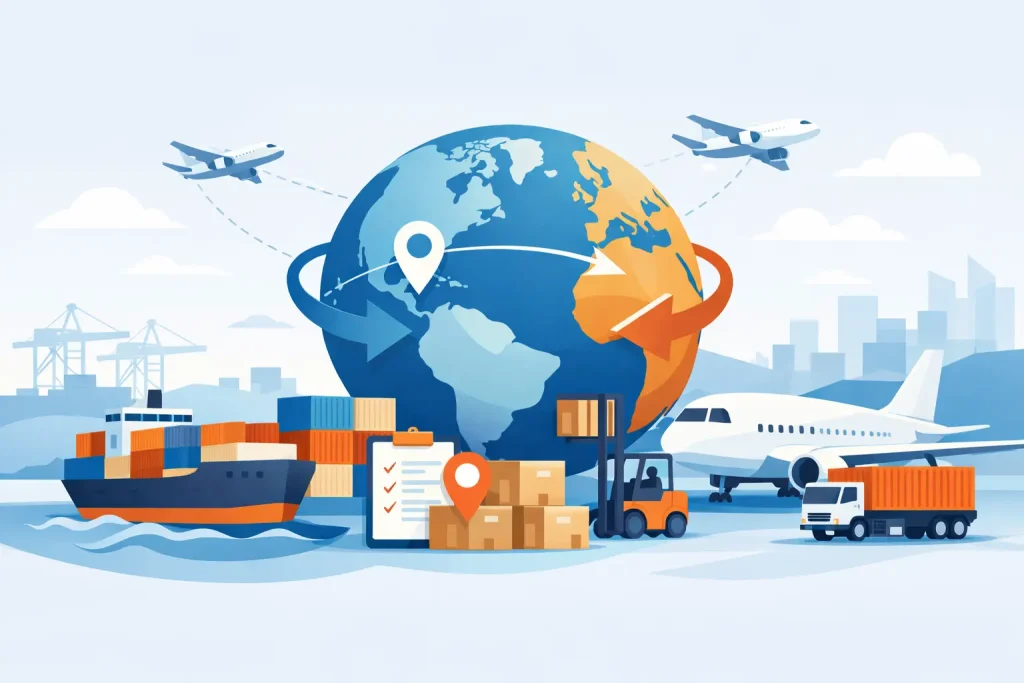
A delayed container does more than miss a sailing date. For an Australian importer or exporter, it can hold up stock, disrupt production, create storage costs and put customer commitments at risk. That is why understanding what is international freight forwarding matters – not as a textbook definition, but as a practical business function that keeps cargo moving across borders with fewer surprises.
International freight forwarding is the coordination and management of cargo as it moves from one country to another. A freight forwarder does not usually operate the ship or aircraft. Instead, the forwarder plans the shipment, books space with carriers, manages transport legs, prepares shipping documentation, coordinates customs processes and keeps the movement on track from origin to destination.
For Australian businesses, that role can be far more valuable than simply arranging freight. Importing into Melbourne, Sydney, Brisbane or Fremantle often involves multiple handovers between overseas suppliers, shipping lines, airlines, customs authorities, cartage providers, warehouses and final delivery networks. Freight forwarding brings those moving parts into one managed process.
What is international freight forwarding in practical terms?
In simple terms, international freight forwarding is the service of organising overseas cargo movements on behalf of importers and exporters. The forwarder acts as the operational link between your business and the many parties involved in the shipment.
That can include selecting the right transport mode, booking sea freight or air freight, arranging collection at origin, preparing commercial documents, managing customs clearance, coordinating local cartage and organising warehousing or distribution where required. If the shipment is oversized, high value, urgent or compliance-heavy, the forwarder also helps manage the added complexity.
This is why freight forwarding is often misunderstood. It is not just freight booking. It is shipment planning, compliance management and transport coordination wrapped into one service.
Why businesses use freight forwarders
Most businesses do not have the time or internal resources to manage every leg of an international shipment directly. Even companies with experienced procurement or operations teams often rely on freight forwarders because global freight is fragmented. One shipment can involve an overseas factory, an origin transport provider, a consolidation point, a shipping line, a customs broker, a terminal, a quarantine process, a local transport operator and a delivery site with specific access requirements.
A freight forwarder reduces that operational burden. Instead of your team chasing updates from multiple providers, the forwarder takes responsibility for coordination, timing and issue management.
There is also a risk factor. International shipping is full of variables – schedule rollovers, port congestion, customs holds, documentation errors and landed cost blowouts. An experienced forwarder helps minimise those risks early, before they become expensive problems.
What does a freight forwarder actually do?
The answer depends on the shipment, but the core function is control. A freight forwarder manages the process from booking through to delivery, with each stage planned around the cargo type, route, budget and transit requirement.
At the front end, the forwarder assesses the shipment itself. That means looking at dimensions, weight, cargo value, packing method, urgency, destination country requirements and whether the freight is better suited to sea, air or a multimodal option. A pallet of retail stock, a container of tiles and a piece of heavy machinery will all require different handling.
From there, the forwarder books cargo space with the relevant carrier and arranges transport to move the goods to port or airport. Documentation is prepared or checked, which may include commercial invoices, packing lists, bills of lading, airway bills, certificates and customs-related paperwork. Accuracy at this stage matters. Small errors can trigger delays, inspections or extra charges.
Once the cargo is in transit, the forwarder monitors milestones and communicates with the client. If something changes, such as a vessel delay or a missed transhipment, the forwarder works on alternatives and revised timing. On arrival, customs clearance, biosecurity requirements, unpacking, storage and final delivery may all need to be coordinated.
For many businesses, that end-to-end visibility is the real value.
Sea freight, air freight and multimodal decisions
One of the most important parts of international freight forwarding is choosing the right transport method. The cheapest option is not always the most efficient, and the fastest option is not always commercially justified.
Sea freight is often the preferred choice for larger volumes, non-urgent freight and cost-sensitive imports. It suits full container load and less than container load movements, especially when stock planning allows for longer transit times. The trade-off is speed. Sea freight can be affected by port congestion, schedule changes and seasonal capacity pressure.
Air freight suits urgent cargo, higher-value goods and supply chains where time matters more than freight cost. It is commonly used for critical spare parts, retail launches, samples or stock replenishment. The trade-off is price, and in some cases, dimensional weight can make air freight significantly more expensive than expected.
Multimodal freight combines more than one transport mode, such as sea freight with road delivery or air freight with domestic linehaul. This approach can improve efficiency, but only when the handovers are well managed. That is where a capable freight forwarder adds value.
Customs and compliance are part of the job
A common misconception is that freight forwarding stops at transport. In reality, customs and compliance are central to the process.
Australia has strict import rules covering tariff classification, duty and GST treatment, biosecurity controls, prohibited goods and documentary requirements. Export shipments also require correct declarations and destination-specific compliance. If these obligations are not handled properly, delays can occur before the cargo even leaves the terminal.
A freight forwarder working closely with customs clearance functions helps ensure the shipment is prepared correctly before arrival. That includes checking documentation, identifying permit requirements, flagging quarantine exposure and making sure cargo descriptions match what is actually being shipped.
This matters even more for specialised freight. Vehicles, boats, machinery, timber packaging, textiles and project cargo can all carry additional regulatory or handling considerations. The more complex the shipment, the more important compliance becomes.
Where freight forwarding saves time and money
Freight forwarding is often judged on the quoted rate, but the lowest rate does not always produce the lowest overall cost. Landed cost is shaped by far more than the ocean or airfreight charge.
A well-managed shipment can reduce avoidable fees such as storage, demurrage, detention, re-delivery charges and document amendment costs. It can also improve stock timing, reduce internal administration and help businesses make better decisions about shipment planning.
There are trade-offs. Some businesses prefer to split providers between transport, customs and warehousing to chase lower line-item pricing. In some cases that can work. But it can also create accountability gaps when something goes wrong. An integrated forwarding model generally offers stronger control, clearer communication and fewer hand-off issues.
That is especially relevant for businesses handling regular imports, time-sensitive exports or cargo that requires a combination of freight, customs, cartage and storage support.
What to look for in an international freight forwarder
Not all freight forwarders offer the same depth of service. Some focus on simple bookings. Others manage broader supply chain requirements, including warehousing, domestic distribution and specialised cargo planning.
For Australian businesses, local market knowledge matters. Your provider should understand port operations, customs processes, biosecurity expectations and the realities of delivery across Australian capital cities and regional locations. Global reach is important, but local execution is what often determines whether cargo clears and delivers on time.
It also helps to look for practical capability rather than broad claims. Can the forwarder manage oversized cargo? Do they handle both imports and exports? Can they coordinate road freight after arrival? Do they provide clear communication around timelines, charges and compliance requirements?
A dependable operator should be transparent about what is included, where risks may sit and what contingencies apply if schedules change. In freight, certainty is rarely absolute. What matters is how well the process is planned and managed when conditions shift.
Is freight forwarding right for every shipment?
For a very simple movement, some businesses may deal directly with a carrier or manage portions of the process themselves. That can make sense if internal capability is strong and the cargo profile is straightforward.
But once shipments involve multiple suppliers, customs exposure, specialised cargo, tight deadlines or multi-leg delivery requirements, freight forwarding becomes less of a convenience and more of a commercial safeguard. It gives businesses a central point of control over a process that can otherwise become fragmented very quickly.
For companies importing stock, exporting products, moving machinery or managing project cargo into or out of Australia, the right freight partner does more than move goods. They help protect timelines, compliance and supply chain continuity. That is the practical answer to what is international freight forwarding – not just transport coordination, but operational control where it counts most.
If your freight movements are becoming harder to manage as volumes grow, routes expand or cargo types become more specialised, that is usually the point where structured forwarding support starts paying for itself.